

 Instant Quote
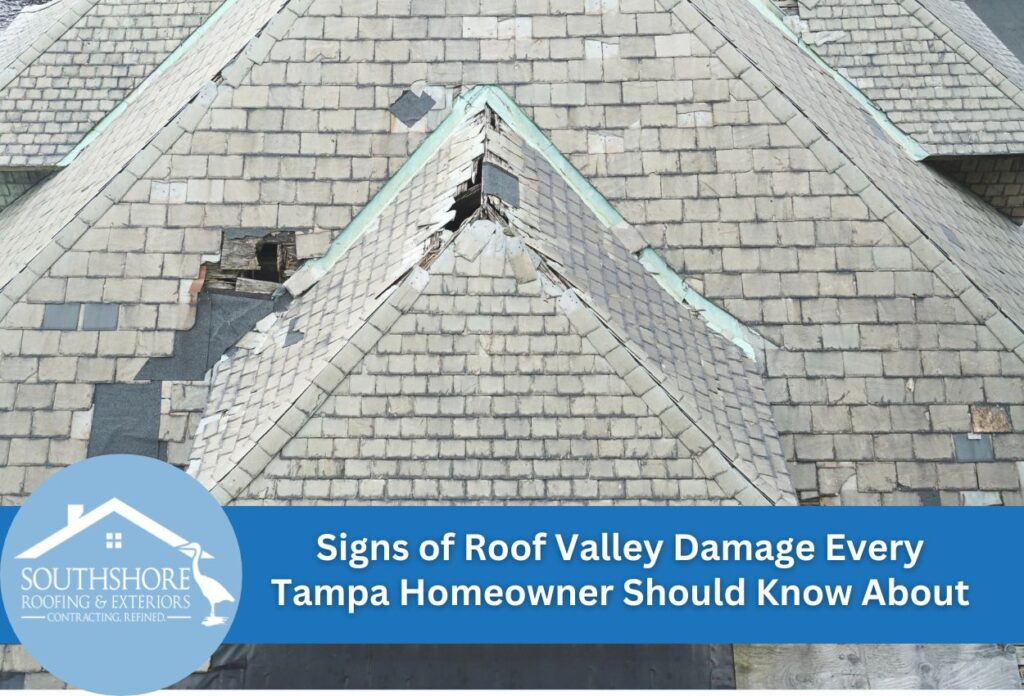
Roof valleys must be one of the most overlooked parts of your home’s roofing system. These V-shaped intersections, where two roof planes meet, channel rainwater toward the gutters, making them especially important in Tampa’s rainy climate. When functioning properly, roof valleys effectively direct thousands of gallons of water away from your home each year. However, when damaged, they can quickly become the source of serious water intrusion problems.
Indicators that a roof valley is leaking often appear subtly at first. Typically, homeowners find a small water stain on the ceiling or a slight discoloration along interior walls. Without the right attention, these minor signs can develop into significant leaks, damaged insulation, and even mold growth. Understanding common roof valley problems is essential for maintaining your home’s durability and preventing expensive emergency repairs.
Being able to spot the warning signs of roof valley damage empowers Tampa homeowners to take action before the next major storm hits. Regular roof valley maintenance provides protection against Florida’s challenging climate while extending the lifespan of your entire roofing system.
Water Stains and Leaks: The First Warning Signs
Interior water stains often reveal roof valley problems long before you’ll notice any exterior damage. These telltale marks typically appear as yellow or brown spots of discoloration on ceilings and walls, frequently in areas directly beneath where roof valleys are located. In Tampa homes, these stains may develop a distinctive pattern that expands during heavy rainfall and appears to fade during dry periods, which is a classic indicator of valley failure rather than plumbing issues.
Florida’s predictable seasons of rain provide an excellent opportunity to track and diagnose leaks. During summer thunderstorms, pay careful attention to when and where moisture appears. If leaks mainly occur during driving rain rather than steady downpours, this often points to water being forced under shingles along valley intersections. Tampa homeowners should document these patterns by taking dated photos of stains and noting weather conditions when leaks occur.
Another revealing sign is the presence of multiple leak points along the same linear path inside your home, which often corresponds directly to the roof valley location above. Water traveling along deteriorated valleys may enter at various points, creating a trail of damage rather than a single concentrated spot. Professional roofers can use these interior clues to quickly identify compromised valleys before conducting a thorough exterior inspection.
Visual Inspection: Spotting Compromised Valley Materials
Regular visual inspections can help Tampa homeowners identify roof valley problems before they escalate into expensive repairs. Using binoculars from the ground level, scan your roof valleys for obvious signs of damage. On asphalt shingle roofs, look for missing granules, curled or broken shingles, and exposed underlayment along the valley. Metal roof valleys may show rust spots, separations along seams, or bent edges that no longer direct water properly.
For tile roofs, common in Tampa neighborhoods, check for cracked or displaced tiles near valleys and darkened areas indicating moisture retention. Regardless of the roofing material, any vegetation growing in valleys signals trapped moisture and organic debris that requires immediate attention. Dark streaks extending from the valleys down the roof slope often indicate water overflowing the valley channel.
Tampa’s humid climate creates the perfect conditions for valley deterioration. Damaged flashing lets in moisture beneath roofing materials, while missing shingles expose vulnerable underlayment to UV damage. Perhaps most concerning is debris buildup, which traps moisture against roofing materials and creates damming that forces water under shingles during Florida’s intense rainstorms.
Pine needles, oak leaves, and palm fronds, common to Tampa yards, are particularly problematic as they interlock to form dense mats in valleys that prevent proper drainage. This trapped moisture creates the right conditions for premature deterioration along valleys and causes eventual leaks.
Mold and Vegetation Growth in Roof Valleys
Florida’s high humidity creates ideal conditions for biological growth along roof valleys. When moisture lingers in these areas, mold, algae, and even small plants can take root, particularly in the Tampa region, where warm temperatures cause this type of growth to speed up. This isn’t just concerning the appearance of your home; they signal persistent moisture issues that may indicate compromised valley integrity.
The first signs typically appear as dark green or black streaking along valley channels. As growth progresses, you might notice fuzzy patches of moss or small ferns establishing themselves between shingles. These plants don’t just appear magically; they require consistent moisture to thrive, which shouldn’t be present in roof valleys that are functional.
It’s important to distinguish between normal environmental buildup and problematic growth patterns. Some surface algae are common on Tampa roofs, appearing as light streaking that affects large sections uniformly. However, concentrated growth specifically in valleys, especially when accompanied by visible plant matter, indicates trapped moisture that isn’t properly draining away from the roofing structure.
Structural Signs: When Valley Damage Affects Your Home’s Durability
When roof valley damage progresses beyond surface issues, structural consequences can threaten your entire home. In Tampa homes, compromised valleys often lead to sagging roof lines that are visible from the street. This depression along valley intersections indicates that water has entered the roof deck, causing the wooden supports beneath to weaken and warp. Florida’s high humidity accelerates this deterioration, as saturated wood quickly loses structural integrity in our climate.
Inside your home, structural valley damage may show itself as cracked ceiling drywall, especially in vaulted or cathedral ceilings. Pay particular attention to visible roof beams that show water staining or appear to be bowing downward. In severe cases, door frames near load-bearing walls may become misaligned as the home’s structure shifts.
Tampa homeowners should recognize the progression from cosmetic to structural issues. Early signs include slight discoloration of interior ceiling corners where valleys direct water toward the home’s perimeter. As damage advances, soft spots in ceiling materials develop, often feeling spongy when pressed. The most serious stage involves visible sagging of exterior rooflines and interior ceiling areas directly beneath valleys.
Florida’s building codes require roofs to withstand significant wind loads, making structural integrity particularly important for Tampa homes. When valley damage compromises this strength, your home becomes vulnerable during hurricane season. Professional assessment is crucial when these structural warning signs appear, as repairs involve not just the roofing materials but potentially the underlying support system as well.
Seasonal Damage Patterns: When to Inspect Your Roof Valleys
Tampa’s weather patterns create distinct seasonal challenges for roof valleys. During Florida’s rainy season, which takes place from June through September, roof valleys channel massive volumes of water, making this period particularly stressful on these critical roof components.
The optimal inspection timeline begins in late spring, during April and May, before hurricane season arrives. This pre-season check allows Tampa homeowners to identify and address minor issues before heavy summer rains expose vulnerabilities. Look for subtle signs of winter damage like displaced granules or slight separations in valley flashing that could worsen during summer storms.
Mid-hurricane seasonal inspections in August are one of the most important times to check for signs of leaks along the roof valley. Pay special attention to debris that’s accumulated in the valleys, as Tampa’s frequent summer thunderstorms can deposit significant tree litter that creates water-damming effects.
Winter brings different challenges to Florida roof valleys. The drier months that take place in November through February create less obvious forms of damage that become problematic once the rainy season returns. During winter inspections, focus on UV damage to exposed valley materials and cracks that develop as roofing materials expand and contract with temperature fluctuations. These seemingly minor winter issues often become the source of major leaks during summer’s first heavy rains.
Professional Assessment vs. DIY Inspection: Making the Right Choice
Deciding between professional evaluation and assessing roof valleys yourself requires understanding your capabilities and the complexity of potential issues. For Tampa homeowners, DIY inspections are generally appropriate for routine monitoring when you can safely observe your roof from ground level using binoculars. You can legitimately check for obvious signs like displaced shingles, visible debris accumulation, or clear damage to valley materials without climbing onto the roof.
Professional assessment becomes necessary when you notice water stains on interior ceilings, visible sagging along valley lines, or after severe weather events like hurricanes, which are common in Tampa. Safety concerns also dictate professional involvement, as homes with steep pitches, multiple stories, or tile roofing systems that can be damaged by walking present significant risks to untrained individuals.
When contacting Tampa roofing contractors about concerns with your roof valley, ask specific questions such as:
- How will you determine if the valley damage is limited to surface materials or extends to the decking?
- What valley configuration do you recommend for Florida’s heavy rainfall patterns?
- Do you follow Florida Building Code requirements for enhanced valley protection in high-velocity hurricane zones?
- What preventative treatments can extend valley life in our humid climate?
Remember that identifying roof valley deterioration early saves significant expenses, as minor repairs addressing flashing or individual shingles cost quite a bit less than structural repairs needed after extensive leaks. Professional roofers bring not just repair skills but diagnostic expertise that can identify underlying issues before they become catastrophic.
Protect Your Home with Timely Roof Valley Repairs from SouthShore Roofing & Exteriors
If you’ve noticed any of the warning signs of roof valley damage that were listed here, don’t wait until it’s too late! SouthShore Roofing & Exteriors specializes in identifying and repairing damaged roof valleys to protect your home from the harsh Florida weather. Early detection and repair can save you from facing more severe structural issues and expensive repairs in the future.
Whether it’s water stains, mold growth, or damaged materials, our expert team is equipped to handle all your roofing needs. Call us today at (813) 400-3329 to schedule a professional repair service and ensure your roof is in top condition year-round.
Related Articles
-
 December 2, 2024What Is A Roof Valley, And Why Does It Need Your Attention?I have always been fascinated by the intricate details that make up the structure of a home. From the foundation to the roof, each component plays a vital role in ensuring our safety and comfort. One such element that often goes unnoticed is the roof valley. Now, you might think it’s just a small detail, […]
 -
 July 30, 2025Do Metal Roofs Need Gutters? Understanding Drainage RequirementsDo metal roofs need gutters? Find out when they’re essential and explore smart drainage options.
 -
 May 30, 2025How Long Can a House in Florida Go Without Gutters?Can your Florida home handle rain without gutters? Learn about the risks and explore effective rainwater management solutions.
Protect Your Home with Expert Roofing
Don’t wait for leaks or storm damage to cause costly repairs. Our experienced roofing team provides fast, reliable service, high-quality materials, and lasting results. Ensure your home stays safe, secure, and looking great—contact us today for a free estimate.


