


The simple answer is yes, parapet walls absolutely need flashing systems to prevent water damage, but understanding why is important information that all homeowners should know. Without proper parapet wall waterproofing, these structures become direct pathways for moisture to enter the building. Water naturally flows down the exterior face of the parapet and collects at the joint where the wall meets the roof surface.
Parapet walls create one of the most vulnerable points on any building’s exterior. These short walls that extend above the roofline serve important purposes like hiding mechanical equipment and providing architectural appeal, but they also present a serious leak that many property owners don’t fully understand.
The consequences of inadequate roof parapet flashing go far beyond minor leaks. Property owners face expensive structural repairs, mold remediation, damaged interior finishes, and compromised insulation systems. These problems develop gradually, often going unnoticed until significant damage occurs throughout the building’s interior spaces.
Understanding parapet wall construction details reveals why specialized flat roof flashing systems are essential rather than optional. The intersection between vertical walls and horizontal roof surfaces creates complex drainage challenges that standard roofing materials cannot address alone. Proper parapet coping and flashing work together to redirect water away from these critical junction points, protecting the entire building structure from moisture-related deterioration.
How Water Attacks Parapet Walls Without Protection
Without proper flashing protection, parapet walls become water magnets that channel moisture directly into the building. Rainwater flows down the exterior face of parapet walls and pools at the critical junction where the vertical wall meets the horizontal roof surface. This concentrated water accumulation creates constant pressure against building materials, searching for any available entry point.
The most problematic areas occur at parapet wall construction details where different materials connect. Leaks happen most frequently at mortar joints between masonry units, gaps around mechanical gaps, and deteriorated sealant lines along parapet edges. These vulnerable spots allow moisture to migrate behind exterior surfaces and into wall cavities.
Parapet coping joints present another common failure point where water infiltration occurs. Temperature changes cause building materials to expand and contract, creating small gaps that grow larger over time. Without adequate parapet wall waterproofing systems, these openings become direct pathways for moisture to reach structural elements.
The flat roof surface adjacent to parapet walls creates additional drainage challenges. Water that cannot drain properly from flat roof flashing systems backs up against parapet walls, increasing hydrostatic pressure and forcing moisture through even minor defects. This standing water accelerates material deterioration and adds to the existing weaknesses in your system’s waterproofing throughout the roof parapet flashing.
Essential Flashing Types That Keep Parapet Walls Dry
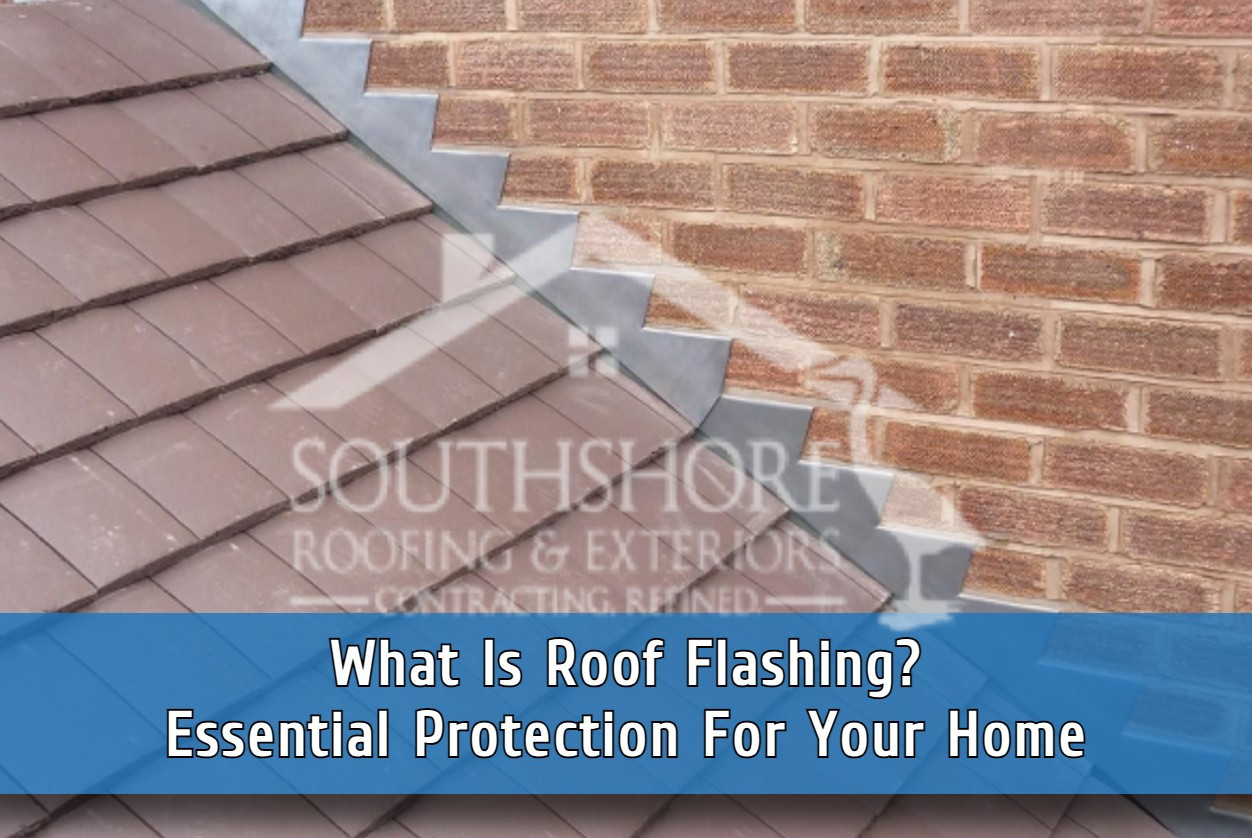
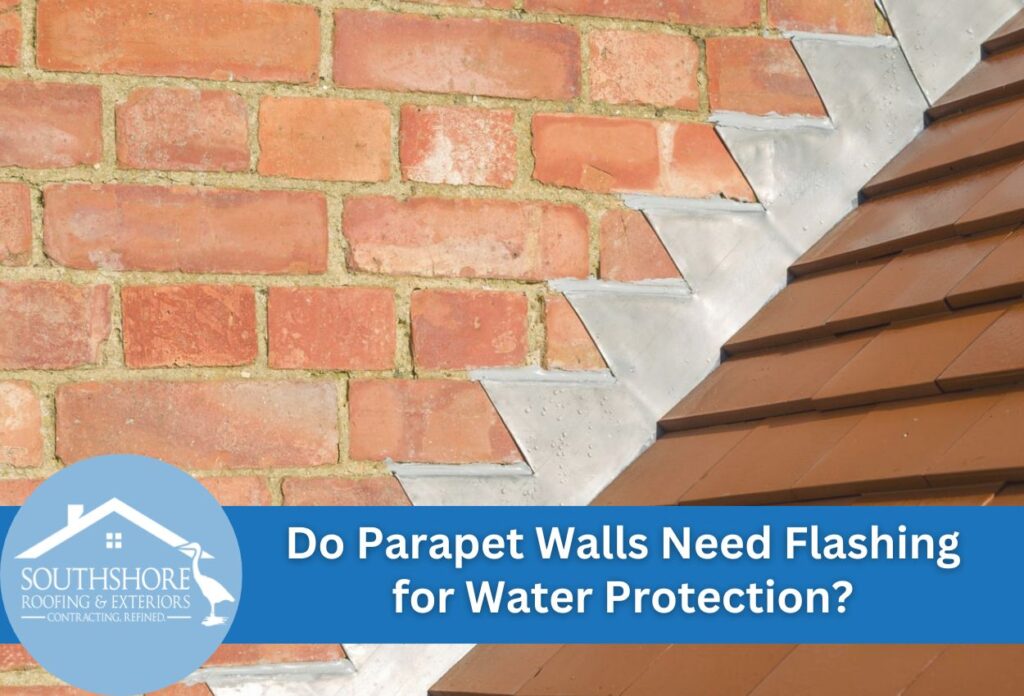
Several specialized flashing materials and designs protect parapet walls from water infiltration. Understanding the different types of roof flashing helps property owners choose the right materials for effective protection. Base flashing forms the foundation of effective parapet wall waterproofing systems by creating a waterproof barrier at the critical wall-to-roof junction. This L-shaped membrane extends up the parapet wall face and across the adjacent roof surface, forming a continuous seal that prevents leaks.
Counter flashing provides the second layer of protection in comprehensive flat roof flashing systems. Installed over the base flashing, this component covers the top edge and redirects water away from vulnerable wall surfaces. Metal cap flashing made from aluminum, copper, or galvanized steel offers excellent durability and weather resistance for long-term performance.
Through-wall flashing represents another critical component in parapet wall construction details. This concealed flashing layer, installed within the wall assembly, intercepts moisture that gets into exterior surfaces and directs it back outside through weep holes. Without through-wall flashing, water trapped inside wall cavities causes structural damage and material deterioration.
Coping flashing works specifically with parapet coping and flashing systems to protect the wall’s top surface. This specialized flashing prevents water from entering the parapet wall from above while allowing proper drainage. The combination of these flashing types creates multiple defense layers that effectively redirect water away from building structures and maintain dry interior conditions.
Professional Installation Steps for Parapet Wall Flashing
Successful parapet wall waterproofing begins with thorough preparation work that determines the long-term effectiveness of the entire system. Professional contractors must evaluate existing conditions, measure all surfaces accurately, and identify potential problem areas before installing any flashing components. This assessment includes examining parapet wall construction details, checking for structural damage, and determining proper drainage slopes to support effective flat roof waterproofing.
Surface preparation requires removing all loose materials, cleaning debris from roof surfaces, and repairing any damaged part of the roof deck. The parapet wall face and adjacent roof deck must be completely dry and structurally sound before flashing installation begins. Contractors also verify that all mechanical gaps are properly sealed and that existing roof membrane conditions will support new flashing systems.
Proper installation techniques for roof parapet flashing installation follow specific sequences that ensure complete water protection. Base flashing installation starts at the lowest point and works upward, maintaining consistent overlap patterns and proper adhesion to both wall and roof surfaces. Each flashing piece must bond completely to the substrate without air pockets or gaps that could allow water infiltration.
Cap flashing installation requires precise measurements and careful integration with parapet coping and flashing elements. Professional contractors secure metal cap flashing with appropriate fasteners, apply sealants at all joints, and verify that water will drain properly away from the wall surface. Quality flat roof flashing systems depend on attention to these installation details for reliable long-term performance and protection against water damage.
Building Code Requirements for Parapet Flashing Systems
Tampa building codes establish specific requirements for parapet wall flashing installations that property owners must follow to ensure structural integrity and water protection. The Florida Building Code mandates that all parapet walls receive proper flashing systems as part of the building’s primary weather barrier. These regulations recognize that parapet wall waterproofing directly impacts overall building performance and occupant safety.
Local building standards require flashing installations to meet minimum height requirements, typically extending at least 8 inches up the parapet wall face and across the roof surface. The code also specifies acceptable flashing materials and installation methods for roof parapet flashing installation projects. Metal flashings must resist corrosion and thermal movement, while concealed flashings need proper overlap dimensions and sealing requirements.
Building inspectors evaluate parapet wall construction details during multiple inspection phases throughout the construction process. Initial inspections verify proper substrate preparation and base flashing installation before roofing materials are applied. Final inspections confirm that parapet coping and flashing systems function correctly and meet all code specifications for water management.
Compliance with flashing requirements affects building permit approvals and occupancy certificates. Properties with inadequate flat roof flashing systems face inspection failures that delay project completion and increase construction costs. Meeting these building code standards from the beginning ensures smooth inspections and protects property owners from future liability issues related to water damage and structural problems.
Warning Signs Your Parapet Walls Need Flashing Repair
Recognizing the early warning signs of failing parapet wall flashing can save property owners from extensive water damage and expensive repairs. Visual indicators on exterior surfaces often provide the first clues that parapet wall waterproofing systems are compromised. Water stains, discoloration, or efflorescence appearing along parapet wall faces signal that moisture is getting through failed flashing components.
Damaged or missing sections of roof parapet flashing installation create obvious vulnerability points where water enters the structure. Property owners should look for loose metal flashing, cracked sealant joints, or gaps between flashing and wall surfaces. These defects in parapet wall construction details allow water to bypass protective barriers and reach structural elements.
Interior damage patterns frequently reveal parapet wall leaks before exterior symptoms become obvious. Water stains on ceiling tiles, walls, or floors near parapet locations indicate that flat roof flashing systems have failed. Peeling paint, bubbling wallpaper, or soft drywall materials suggest ongoing moisture infiltration from compromised parapet coping and flashing installations.
Musty odors, visible mold growth, or unexplained humidity increases in upper-floor areas often trace back to parapet wall flashing failures. These conditions develop when water enters wall cavities and creates ideal environments for microbial growth. Property owners who notice these symptoms should immediately arrange for professional inspection and repair of their parapet waterproofing systems to prevent further structural damage and health concerns.
Choosing the Right Contractor for Parapet Flashing Work
Selecting qualified professionals for parapet wall waterproofing projects requires careful evaluation of contractor credentials and specialized experience. Roofing contractors must demonstrate extensive knowledge of parapet wall construction details and proven expertise with flat roof flashing systems. Property owners should verify that potential contractors hold current state licenses, maintain proper insurance coverage, and have completed similar parapet flashing installations successfully.
Experience with roof parapet flashing installation becomes particularly important given the technical complexity of these waterproofing systems. Contractors should provide examples of completed projects, references from previous clients, and detailed knowledge of local building code requirements. Those specializing in commercial roofing typically possess stronger backgrounds with parapet coping and flashing systems compared to residential contractors.
Essential questions help property owners evaluate contractor qualifications and installation approaches. Ask about specific materials they recommend for your building type, warranty coverage for both materials and labor, and their typical timeline for project completion. Qualified contractors should explain their surface preparation methods, quality control procedures, and how they handle unexpected conditions discovered during installation.
Request detailed information about their approach to parapet wall waterproofing, including inspection procedures and testing methods used to verify installation quality. Professional contractors provide comprehensive proposals that outline all work phases, material specifications, and cleanup procedures. Those offering extremely low prices often cut corners on critical installation steps that compromise the long-term effectiveness of flat roof flashing systems throughout the building envelope.
Protect Your Property with Expert Parapet Wall Flashing from SouthShore Roofing & Exteriors
Parapet walls are critical components of your building’s roof, especially in areas prone to severe weather, and without proper flashing, they are vulnerable to water intrusion and subsequent damage. Ensuring that your parapet walls have the correct flashing installed is not just about compliance with local Tampa building codes, it’s about safeguarding your investment from water damage and expensive repairs.
At SouthShore Roofing & Exteriors, we specialize in parapet wall waterproofing and flashing installation. Our team uses only the highest quality materials and precise installation techniques to ensure your parapet walls are effectively sealed and protected. Don’t wait for the signs of water damage to show before you act. Call us today at (813) 400-3329 to schedule a consultation and ensure your building is properly equipped to handle whatever nature throws its way.