 Instant Quote
Key Points:
- Steam coming off your roof typically occurs when warm, humid indoor air meets cold roofing materials, creating visible water vapor.
- Thermal bridging through gaps in insulation creates hot spots on your roof that cause uneven melting and steam formation.
- Improve ventilation by clearing roof vents and reducing indoor humidity, but call professionals for persistent steam or when you notice signs of water damage.
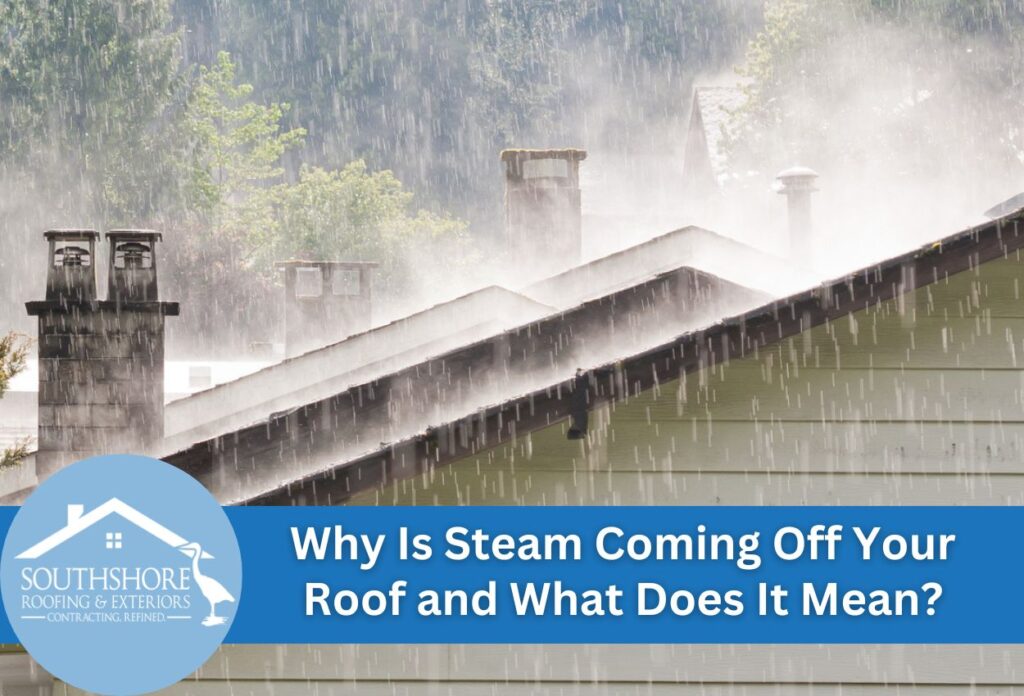
Steam rising from a roof often catches homeowners off guard, creating concern about potential problems with their home’s structure or roofing systems. This visible phenomenon occurs when warm, moist air meets cooler surfaces, but the underlying causes can vary significantly depending on weather conditions, home construction, and ventilation systems.
Roof condensation typically stems from temperature differences between indoor and outdoor environments. When heated or humid air from inside the home escapes through the attic and encounters significantly different roof surface temperatures, moisture in that air transforms into visible vapor. This process becomes more noticeable during specific weather conditions, particularly when outside temperatures drop while indoor heating systems work to maintain comfortable living spaces.
Attic ventilation problems rank among the most frequent culprits, as inadequate airflow allows warm, humid air to accumulate beneath the roof deck. Thermal bridging roof conditions, where heat transfers through structural elements, can create hot spots that generate steam when atmospheric conditions align properly.
Temperature Differences Creating Roof Condensation
Understanding how temperature variations create roof condensation helps explain the steam phenomenon many homeowners observe. When warm indoor air escapes into attic spaces and encounters cold outdoor temperatures on roofing materials, condensation forms naturally as moisture transforms from vapor to liquid droplets.
The temperature differential between heated indoor environments and cold exterior surfaces creates the perfect conditions for visible water vapor. Warm air carries moisture from daily activities like cooking and showering. As this humid air rises through the home and reaches the cooler attic space, it meets roofing materials experiencing different surface temperatures due to environmental conditions.
Humidity levels inside the home play an important role in condensation formation on roofing materials. Higher indoor humidity increases the moisture content of the air that eventually reaches the roofing system. Homes with inadequate ventilation trap this moisture-laden air, creating the ideal conditions for roof condensation to show up as visible steam.
Attic ventilation problems add to these temperature-related issues by preventing proper air circulation. Without adequate ventilation, warm, humid air accumulates beneath the roof deck, creating persistent moisture conditions. This trapped air increases the likelihood of thermal bridging roof scenarios, where heat conducts through structural materials and creates temperature variations that promote condensation and subsequent issues across different roof sections.
Poor Attic Ventilation Causing Heat and Moisture Buildup
Inadequate attic ventilation creates a cascade of problems that often results in steam formation on roof surfaces. When airflow becomes restricted or blocked, warm, humid air accumulates in attic spaces with nowhere to escape. This trapped air eventually finds alternative pathways through the roof assembly, emerging as visible steam when it contacts cooler outdoor temperatures.
Several telltale signs indicate that attic ventilation problems are contributing to roof moisture issues. Homeowners may notice condensation on attic surfaces or musty odors suggesting trapped moisture. The presence of water stains on ceiling materials or insulation often points to poor air circulation, allowing humidity to condense within the attic space.
Blocked or insufficient roof vents prevent the natural airflow patterns necessary for proper moisture control. Ridge vents clogged with debris, inadequate soffit ventilation, or missing exhaust vents disrupt the balanced air movement that removes humid air from attic areas. Without this circulation, thermal bridging develops as heat builds up in specific locations.
The combination of trapped warm air and inadequate ventilation creates conditions for persistent moisture accumulation and heat buildup within the attic. As heated air accumulates beneath the roof deck it warms certain roof sections unevenly. These temperature variations increase condensation risk and worsen existing moisture problems throughout the roofing system.
When Heat and Humidity Create Roof Steam
Uneven roof temperatures in hot, humid climates can create conditions where moisture evaporates rapidly and appears as visible steam. This often occurs when attic heat warms roof surfaces while humid outdoor air surrounds the structure.
Excessive attic heat caused by poor insulation or ventilation raises roof surface temperatures significantly. When this heat meets moisture from humid air or residual roof dampness after rain, evaporation accelerates, producing visible vapor above certain roof sections.
Warning signs of heat-driven moisture issues include persistent steam during sunny conditions, uneven roof surface temperatures, and excessive attic heat. Homeowners may also notice higher cooling costs or moisture accumulation inside attic spaces. Addressing ventilation and insulation deficiencies helps reduce heat retention and moisture evaporation before long-term damage develops.
Moisture Problems Within Your Roof Structure
Leaks through damaged roofing materials create persistent moisture conditions that manifest as steam rising from roof surfaces. Unlike temporary condensation from temperature differences, structural moisture problems develop when roofing components fail to prevent leaks. Cracked shingles, deteriorated flashing, or compromised roof gaps allow moisture to enter the roof assembly, where it becomes trapped and creates ongoing humidity issues.
Once water gets into the roof, it affects multiple building components simultaneously. Wet insulation loses its thermal properties and creates pockets of trapped moisture that contribute to roof condensation. Saturated roof decking promotes mold growth and structural deterioration while generating humid conditions that appear as visible vapor when atmospheric conditions change. These moisture pockets persist long after initial leaks and moisture occurs, creating chronic problems that get worse over time.
Thermal Bridging and Heat Transfer Through Your Roof
Thermal bridging occurs when heat bypasses insulation through structural elements, creating temperature inconsistencies that contribute to steam formation on roof surfaces. These heat pathways develop where wood framing, metal fasteners, or other building materials provide direct thermal connections between warm interior spaces and cold exterior surfaces. As heat travels through these bridging elements, it creates hot spots on the roof that cause visible vapor when moisture-laden air encounters these temperature variations.
Gaps in insulation amplify thermal bridging roof problems by allowing hot air to reach the roof decking through unintended pathways. Missing insulation around gaps, compressed insulation near structural members, or improperly installed vapor barriers create zones where heat transfer occurs more readily. These areas become warm spots during periods of high attic heat, increasing evaporation and generating visible vapor as moisture encounters cooler surrounding air.
The resulting uneven temperature zones across roof surfaces create ideal conditions for ongoing roof moisture issues. Areas with thermal bridging stay warmer than properly insulated sections, causing melting patterns that disrupt normal drainage. This temperature variation adds to existing attic ventilation problems by creating pressure differences that draw more warm air through insulation gaps. Identifying and addressing these locations of thermal bridging requires examining insulation continuity and sealing air leak paths that allow heat to bypass intended insulation barriers.
Solutions to Address Steam Issues and Protect Your Roof
Addressing steam formation requires both immediate interventions and professional assessment to prevent long-term damage. Homeowners can take several steps to improve conditions contributing to roof condensation while determining whether professional roofing services are necessary.
Improving attic ventilation represents the most effective immediate action for reducing steam formation. Clearing debris from existing roof vents allows trapped air to escape properly, while ensuring soffit vents remain unblocked, promoting healthy air circulation. Homeowners should also check that bathroom and kitchen exhaust fans vent directly outside rather than into attic spaces, as this prevents additional moisture from accumulating beneath roofing surfaces.
Reducing indoor humidity levels helps minimize moisture issues by limiting the amount of water vapor that reaches attic areas. Running exhaust fans during cooking and showering, using dehumidifiers in basements, and ensuring proper clothes dryer ventilation all contribute to lower household humidity.
Professional roof inspections becomes necessary when steam formation persists despite ventilation improvements or when other warning signs appear. Water stains on ceilings or visible insulation damage indicate underlying problems requiring expert assessment. Thermal bridging roof conditions and complex attic ventilation problems often need professional solutions involving insulation upgrades, structural modifications, or comprehensive ventilation system redesign to eliminate persistent moisture conditions effectively.
Protect Your Home with SouthShore Roofing & Exteriors
If you’ve noticed steam coming off your roof, it’s crucial to address it promptly to prevent long-term damage to your home. Temperature differences, poor attic ventilation, and moisture accumulation are just a few causes of this phenomenon.
Don’t let roof steam lead to bigger, more expensive problems. Call us today at (813) 400-3329 to schedule a consultation and protect your home from potential damage. Let SouthShore Roofing & Exteriors take care of your roofing needs and give you peace of mind.