 Instant Quote
Key Points:
- Yes, you can remove oil canning on a metal roof using various professional and DIY repair methods.
- Oil canning typically results from improper installation or thermal expansion, which can be addressed with specific adjustments.
- Effective prevention includes proper installation and regular maintenance, with severe cases requiring professional roofing contractors.
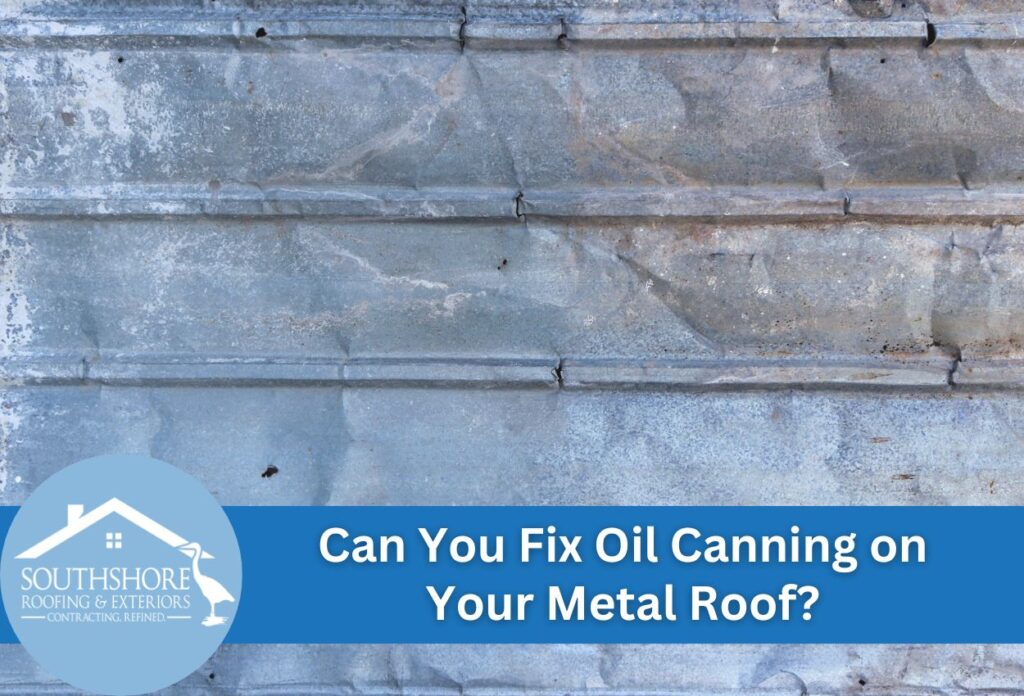
Oil canning on metal roofs creates unsightly wavy patterns and distorted panels, compromising your home’s visual appeal. This common roofing defect appears as rippling or buckling across metal surfaces, making even new installations look warped and unprofessional. The good news is that the visual impact of oil canning can often be reduced through proper adjustments or, in some cases, panel replacement when necessary.
Understanding how to fix oil canning on metal roofs starts with recognizing that this issue stems from thermal expansion, improper installation, or inadequate roof deck preparation. The wavy distortions occur when metal panels cannot expand and contract naturally, creating stress points that manifest as visible waves across the roofing surface.
Options for addressing metal roof wave distortion range from minor fastener adjustments to panel replacement, depending on the severity and the original installation conditions. Professional contractors can successfully address these installation defects through targeted repair methods that restore your roof’s smooth appearance. Oil canning prevention on metal roofs involves proper installation techniques, but existing problems can be resolved with the right approach and expertise.
What Causes Oil Canning in Metal Roofing Systems
Understanding the root causes of oil canning helps determine the most effective metal roof oil canning repair approach. Installation-related factors play a significant role in panel distortion, particularly when contractors use improper fastening patterns that create uneven stress distribution across metal surfaces. Inadequate roof deck preparation can leave panels without proper support, allowing them to flex and buckle under normal conditions.
Thermal expansion issues represent another major contributor to oil canning problems. When metal panels cannot expand and contract naturally due to restrictive fastening or insufficient allowances for movement, the resulting stress manifests as visible waves and distortions. Temperature fluctuations cause metal to repeatedly expand and contract, gradually getting worse existing installation defects.
Material and environmental factors also influence how to fix oil canning on metal roofs effectively. Thinner panels are more susceptible to distortion than heavier gauge materials, while structural movement from settling or wind loads can trigger wave patterns in properly installed systems. Solutions for metal roof wave distortion must address these underlying causes rather than simply treating surface symptoms to achieve lasting results.
Professional Assessment and Repair Methods
Professional contractors begin metal roof oil canning repair with comprehensive inspection techniques that measure panel displacement and evaluate structural integrity. These assessments utilize specialized tools to quantify wave distortion severity and identify root causes affecting the roofing system. Experienced technicians examine fastener patterns, roof deck conditions, and panel alignment to determine which solutions for metal roof wave distortion will prove most effective.
Effective repair approaches focus on correcting fastening patterns and allowing panels to move naturally with temperature changes while maintaining proper attachment to the structure. Professional contractors adjust fastener spacing and positioning to allow proper thermal movement, reducing the restrictive forces that create wave patterns. If uneven support beneath the panels contributed to the distortion, correcting the underlying surface may require panel removal and proper reinstallation over a flat, uniform base.
Effective metal roof installation defect repair requires specialized equipment and expertise to manipulate panels without causing damage. Professional methods often involve systematic fastener adjustment or replacement and, when necessary, selective panel replacement to improve the roof’s overall appearance. These comprehensive approaches to how to fix oil canning on metal roofs deliver lasting results by addressing both visible symptoms and underlying structural causes that create wave distortion patterns.
DIY Solutions for Minor Oil Canning Issues
Homeowners can address minor oil canning problems through careful fastener inspection and adjustment techniques that don’t require professional intervention. Simple metal roof oil canning repair begins with examining screw placement patterns to identify areas where fasteners may be over-tightened or improperly positioned. Loosening screws that compress panels too tightly allows metal to move naturally during thermal expansion cycles, reducing stress-related wave distortion.
Basic panel realignment represents another accessible approach for how to fix oil canning on metal roofs when distortion remains minimal. Homeowners can inspect for over-tightened fasteners and correct minor fastening issues, but panels themselves should not be bent or forced back into position. This technique works best on newer installations where oil canning prevention on metal roofs failed due to minor installation inconsistencies rather than structural defects.
Safety considerations are paramount when attempting any metal roof installation defects repair from ground level or stable platforms. Proper ladder placement, non-slip footwear, and avoiding work during wet conditions prevent accidents during inspection and minor adjustments. Understanding personal limitations helps homeowners recognize when solutions for metal roof wave distortion exceed safe DIY capabilities and require professional contractors to complete repairs effectively without compromising safety or warranty coverage.
Prevention Strategies During Installation
Proper installation techniques form the foundation of oil canning prevention on metal roofs by establishing correct structural support from the initial placement. Professional contractors focus on precise fastener spacing that follows manufacturer specifications while avoiding over-tightening that restricts natural thermal movement. Roof deck preparation involves ensuring a completely flat and properly spaced roof decking or purlins that provide uniform support across all panel sections.
Panel handling procedures during installation significantly impact long-term performance and wave distortion susceptibility. Experienced installers avoid walking directly on panels and use proper lifting techniques that prevent stress concentration points from developing during positioning. Strategic fastener placement allows controlled expansion and contraction while maintaining secure attachment to the underlying structure.
Material selection considerations directly influence susceptibility to distortion. Panel profile, width of the flat pan, and the presence of stiffening features such as ribs or striations often have more impact than panel thickness alone. Proper clip systems and fastening methods allow panels to expand and contract naturally with temperature changes without creating stress that contributes to distortion. These preventive measures eliminate many conditions that require metal roof oil canning repair interventions later in the system’s lifespan.
When to Call Professional Roofing Contractors
Professional evaluation is recommended when oil canning is widespread or when other installation issues are present, even though oil canning itself is primarily a cosmetic condition. If panel alignment issues or fastening problems are present along with oil canning, those installation concerns should be addressed to ensure proper water shedding. Professional contractors should handle situations where multiple panels show significant buckling or where underlying structural movement has caused widespread distortion across large roof sections.
Metal roof installation defects repair becomes necessary when DIY approaches fail to resolve wave patterns or when distortion continues getting worse despite attempted adjustments. Complex cases involving roof deck problems, improper framing, or extensive panel replacement needs exceed typical homeowner capabilities and require specialized tools and expertise. Professional assessment becomes critical when oil canning accompanies other roofing problems like loose fasteners, damaged panels, or structural settlement issues.
Professional repair services provide warranty protection and proper material sourcing that ensures long-term solutions for metal roof wave distortion problems. Experienced contractors implement comprehensive approaches to how to fix oil canning on metal roofs through systematic panel replacement, roof deck modification, and structural adjustments that address root causes rather than surface symptoms. These professional interventions deliver lasting results while maintaining manufacturer warranties and ensuring proper integration with existing roofing systems.
Long-Term Maintenance to Prevent Future Problems
Regular maintenance schedules form the cornerstone of effective oil canning prevention on metal roofs by identifying developing issues before they become major repair concerns. Property owners should establish biannual inspection routines that examine panel alignment, fastener integrity, and early signs of wave distortion along roof sections. These systematic evaluations help detect subtle changes in panel positioning that indicate thermal stress buildup or structural movement affecting the roofing system.
Florida’s temperature swings and strong sun exposure increase the expansion and contraction cycles that metal panels experience throughout the year, which can make existing visual distortion more noticeable over time. Regular cleaning schedules remove debris accumulation that can trap moisture against panels and create uneven thermal conditions, leading to localized stress points.
Preventive maintenance practices focus on maintaining proper drainage patterns and ensuring adequate ventilation systems that minimize temperature differentials across roof surfaces. Annual fastener inspections help identify loose connections before they allow panel movement that creates wave distortion patterns. These proactive approaches to metal roof oil canning repair and maintenance significantly extend system lifespan while preserving the smooth appearance that prevents future solutions for metal roof wave distortion from becoming necessary.
Expert Solutions for Oil Canning on Metal Roofs by SouthShore Roofing & Exteriors
If you’re seeing wavy or distorted panels on your metal roof, you’re likely experiencing oil canning. SouthShore Roofing & Exteriors specializes in addressing this common issue with targeted repair strategies and professional expertise. Our team uses advanced inspection techniques to determine the root cause of your roof’s oil canning and employs effective methods such as panel tensioning and roof decking modification to correct it.
Ongoing maintenance and proper installation are key to preventing future oil canning. At SouthShore Roofing & Exteriors, we ensure that every metal roof installation meets rigorous standards to minimize risks of distortion from the start. Don’t let oil canning compromise the look and structural integrity of your roof. Call us today at (813) 400-3329 to schedule a professional assessment and discover how we can help you achieve a flawless roof appearance.