

What’s the Difference Between an Active Leak and Latent Water Damage in a Tampa Home?
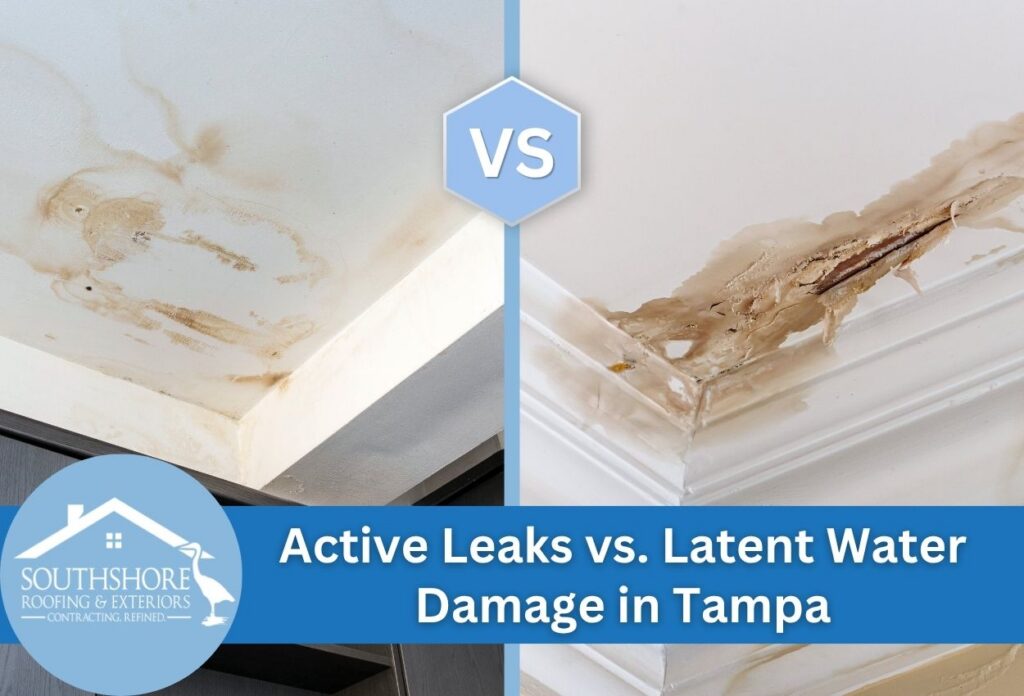

An active leak means water is entering your home right now, while latent water damage represents the unresolved damage remaining from past moisture entry. These are two different problems, and mixing them up leads to missed repairs, failed insurance claims, and structural damage that keeps spreading quietly behind walls and under your roof deck.
Tampa averages around 52 inches of rain per year, with relative humidity running above 70% through most of the warm season. That combination makes both conditions common here. Water gets in fast during a storm, but the damage it leaves behind can hide for months or years without a single visible drip.
Aged roofs face a higher probability of undetected moisture damage. That means latent damage on older homes is frequently discovered only during a home inspection, an insurance claim, or a sale, not while it is actively happening.
What Are the Warning Signs That Tell You Which Type of Problem You Have?
Water stains that grow larger after rain signal an active leak, while stains that stay the same size for weeks point to latent damage that already dried out. Both are serious, but they need different responses.
Slow leaks are a hybrid case. Water is still moving, but the volume is low enough that no drip ever appears. A simple water meter test can catch them: shut off every water source in the house, read the meter, wait two hours, then read it again. Any movement means water is flowing somewhere it should not be.
| Symptom | Likely Cause (Active vs. Latent) | Urgency Level |
|---|---|---|
| Dripping or spreading ceiling stain after rain | Active; water entering now | Immediate |
| Stable discolored drywall with no recent rainfall | Latent; past moisture, dried in place | Within 30 Days |
| Musty odor with no visible moisture source | Latent; mold growth behind surfaces | Within 30 Days |
| Soft or spongy roof deck detected during inspection | Latent; extended moisture exposure to wood | Pre-Sale Discovery |
The most dangerous warning sign is no warning sign at all. Older roofs with weakened materials have a higher probability of undetected leaks, meaning damage on older homes is often found only at inspection or claim time.
How Does Tampa’s Climate and Roof Age Make Latent Water Damage Harder to Detect?
Tampa’s hurricane season runs from June through November, and every storm that passes through delivers multiple rounds of heavy rain that push moisture through aged flashing, pipe boots, ridge caps, and vulnerable intersections. The problem is what happens between storms. Moisture that reaches the roof deck or wall cavity can dry partially before the next storm, never enough to trigger a visible stain, but enough to keep feeding a slow cycle of hidden damage.
The age of a roof is the biggest factor driving that cycle. Roofs installed before 2015 were built before Florida’s updated wind-resistance code requirements took effect. FEMA-reported results show that 90% of asphalt roofs installed before 2015 were badly damaged by storms, compared to 28% of roofs installed or replaced after 2015. Tampa’s older homes have roofs where flashing sealants have hardened, pipe boots have cracked, and ridge caps have lost their grip, all without any interior leaks ever appearing.
Overnight humidity adds another layer of difficulty. Summer nights in Tampa commonly push relative humidity above 80%, which slows evaporation inside enclosed areas such as attics and wall assemblies. Mold can grow within 24 to 48 hours after a leak develops when humidity stays that high, meaning damage can be active and spreading even when there is no visible sign of it. Hidden water damage signs in a Tampa home often go unnoticed until a professional inspection with moisture meters catches what eyes cannot.
Active Leaks vs. Latent Damage Repair Costs
Addressing water damage when it is still an active leak is far less expensive than repairing the problem after hidden moisture lingers for months. The table below shows what Tampa homeowners typically pay at each stage.
| Repair Needed | Average Repair Cost (Latent Damage) | Average Repair Cost (Active Leak) | Typical Timeline Before Visible Damage |
|---|---|---|---|
| Roof deck replacement | $1,500 to $4,000 (full deck repair) | $75 to $150 per sheet (localized) | 6 to 24 months |
| Mold remediation; localized | $500 to $1,500 | $150 to $400 (surface treatment) | 1 to 3 months |
| Mold remediation; widespread | $3,000 to $10,000+ | $500 to $1,500 (caught before spread) | 3 to 18 months |
| Drywall and insulation replacement | $1,200 to $5,000 | $300 to $800 (patch repair) | 1 to 6 months |
| Structural framing repair | $2,500 to $8,000 | $500 to $1,500 (early treatment) | 12 to 36 months |
| Full roof replacement | $8,000 to $20,000+ (material and size dependent) | $300 to $1,500 (spot repair) | 2 to 5 years |
Interior pipe leaks can add additional expenses. An undetected plumbing leak that goes unnoticed until mold appears inside a wall can run $2,000 to $8,000 in repairs, compared to $150 to $400 for a pipe repair caught before moisture spreads.
A full roof replacement in Tampa ranges from $8,000 to $20,000 or more depending on the material and size of the roof, but catching a minor active leak often costs less than $1,500 to fix.
Should You Call a Roofer, a Plumber, or a Home Inspector First, and When Does Each Apply?
Who you call first depends entirely on where the moisture appears and whether it follows recent severe weather. Making the wrong call can cause delays in addressing the issue, which potentially allows water damage to grow.
- Moisture at the ceiling, roof-adjacent walls, or after a storm: Contact a licensed roofing contractor first. If the stain grows after rain or appeared following high winds, the entry point is almost certainly the roof’s flashing, pipe boots, ridge caps, or damaged roof deck. Residential roof repair involving structural elements or reroofing in Tampa requires hiring a contractor licensed by the Florida Department of Business and Professional Regulation.
- Moisture near fixtures, appliances, or at the base of walls: Contact a licensed plumber first. When water appears independent of any storm, the source is more likely a supply line, drain, or appliance connection, rather than the roof.
- No recent moisture development but signs of past damage, especially before a sale: Commission a professional home inspection with moisture scanning before anything else. Florida sellers carry a legal disclosure obligation for known material defects. Latent damage found by a buyer’s inspector while your home is under contract can lead to renegotiation, repair credits, or total deal cancellation.
- Repairing leaks before selling is measurably cheaper than repair credits: Repair credits demanded by buyers after discovering undisclosed damage commonly reach $2,000 to $8,000, while the average cost to repair an active leak ranges from $75 to $1,500 depending on which repair is needed.
Calling the wrong professional first causes delays while moisture continues to spread, and in Tampa’s humidity, mold can grow within 24 to 48 hours of a leak forming.
What Steps Can Tampa Homeowners Take to Find a Problem Before It Spreads?
Start with a water meter shutoff test. The test takes two hours, costs nothing, and immediately rules out an active plumbing leak before any inspector sets foot in your home. Tampa’s hurricane season goes from June through November, making inspections in late May and after severe storms the most valuable times for catching problems early.
- Run the water meter test first: Shut off every water source in the house, read the meter, wait two hours, then read it again. Any movement means water is flowing somewhere it should not be.
- Inspect the attic within 30 days of any tropical storm or heavy rain: Look for staining, a soft roof deck, or daylight coming through. A soft or spongy roof deck means moisture has been sitting there long enough to weaken the wood.
- Do a ground-level visual check after every storm: Scan pipe boots, ridge caps, and flashing from the ground. These are the three most common points of entry for water on Tampa roofs.
- Schedule a licensed roof inspection at least once per year, and more often for older roofs: Many Tampa contractors offer free roof inspections. Aged roofs carry a higher risk of undetected water damage and should be inspected more often.
- Request thermal imaging or a moisture meter scan: A standard home inspection may not include moisture scanning. Adding this service runs roughly $100 to $200, but can identify hidden moisture behind walls or ceilings.
Late May inspections and post-storm checks give Tampa homeowners the best chance of catching an active leak before it turns into months of latent damage. SouthShore Roofing & Exteriors offers licensed roof inspections and can help determine whether a moisture issue requires a roofer, plumber, or specialist next.
Ready to Find Out What’s Actually Happening in Your Tampa Home?
Catching a roof problem at the active leak stage can cost less than $1,500, while the same problem discovered after months of hidden moisture can reach repair expenses of $8,000 to $20,000 or more. That gap is exactly why a licensed inspection before or immediately after any severe weather matters so much in Tampa.
SouthShore Roofing & Exteriors serves homeowners across Tampa with licensed roof inspections that find hidden damage. With hurricane season running June through November, scheduling before the season begins, or right after any storm, is the best way to stay ahead of damage that spreads silently.
Not ready to schedule? Learn more about storm damage repair.