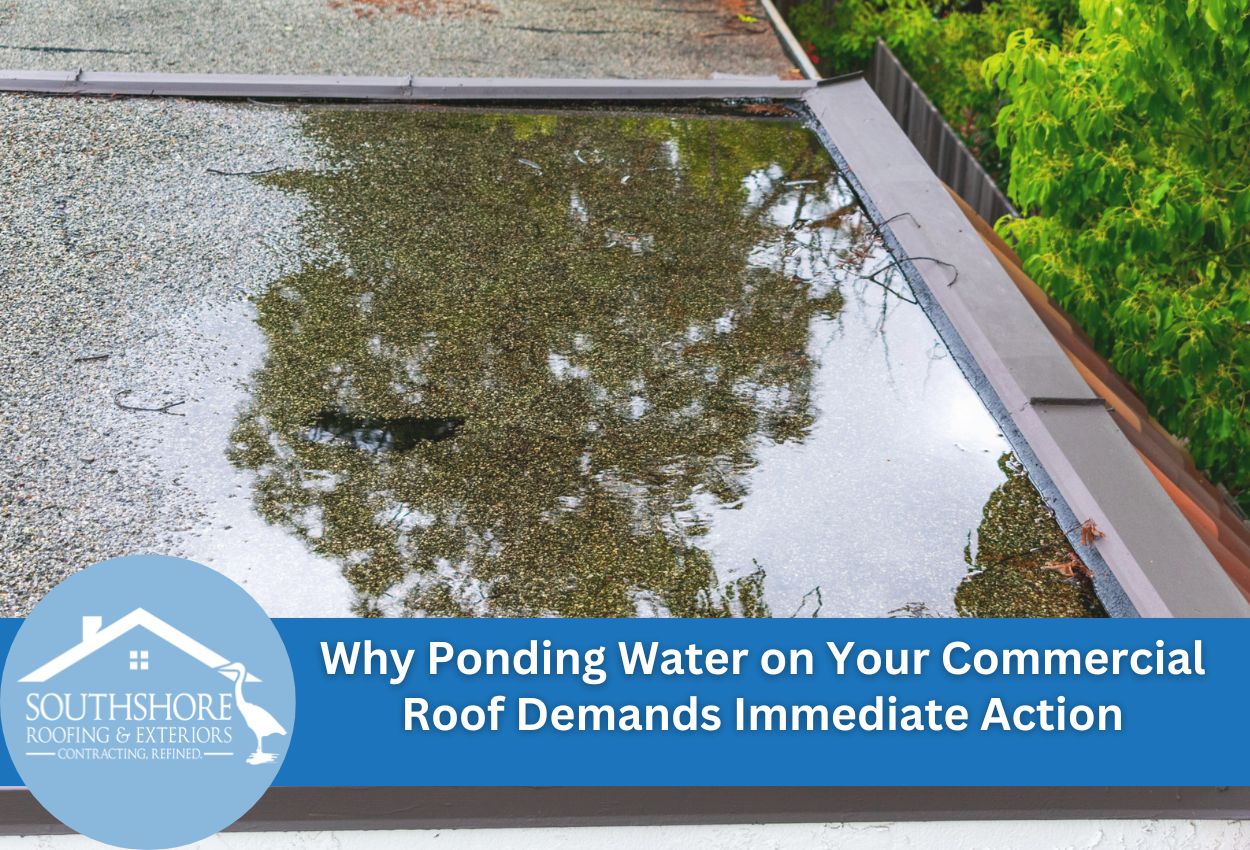


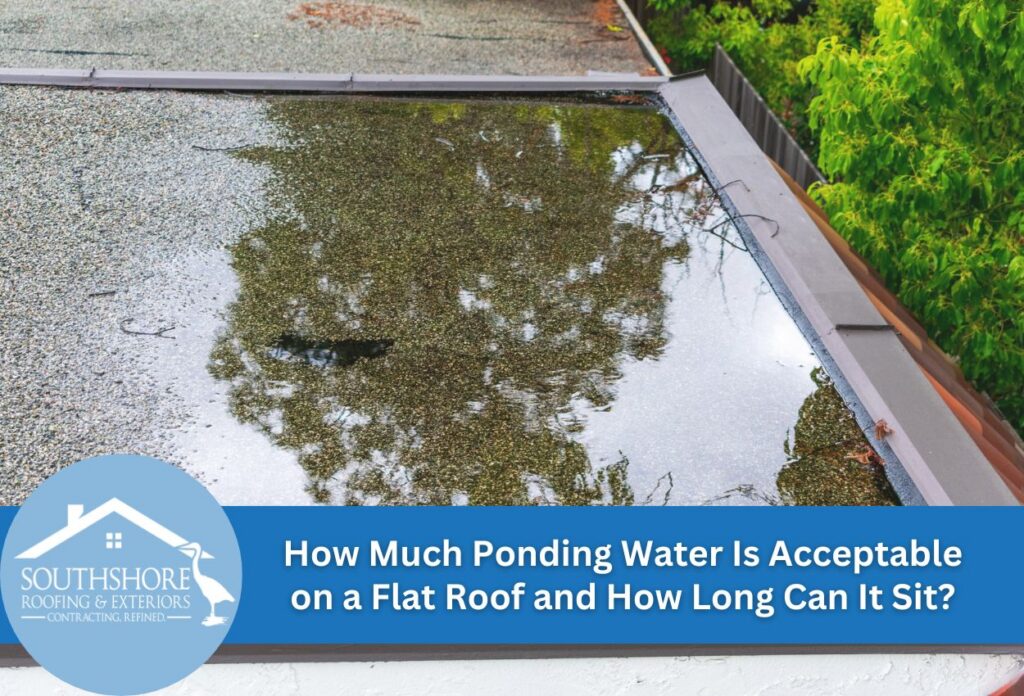

No standing water should remain on a flat roof more than 48 hours after rainfall, which is the standard set by Florida Building Code Section 202, and anything beyond that threshold officially qualifies as ponding water. The National Roofing Contractors Association puts the window even tighter, flagging water that sits for 24 to 48 hours as a problem worth addressing.
In Tampa, that deadline matters more than in most cities. Tropical downpours, relentless humidity, and intense UV radiation combine to break down flat roof membranes faster than they would in drier climates. Standing water on a Tampa roof does not just sit; it heats up, magnifies UV rays, and accelerates wear on the membrane underneath it.
This article covers exactly what you need to know: how deep ponding becomes dangerous, how long is too long, and when it is time to call a Tampa roofing contractor before a slow drain turns into a major repair bill.
*Please note, price ranges listed in this article may not reflect the final cost of your project. Prices are subject to change based on various factors such as local labor rates, material quality, and more. All costs established in this article are rough estimates based on average industry rates.
What Do Building Regulations Actually Say About Flat Roof Ponding Water?
The International Building Code requires a minimum slope of 1/4:12 for membrane roofing systems on low-slope commercial buildings, which is roughly 1 inch of rise for every 4 feet of horizontal run. Florida Building Code Section 202 goes further, defining positive roof drainage as the complete removal of standing water within 48 hours of rainfall under normal ambient conditions. Any water remaining beyond that window is officially classified as ponding water, regardless of depth.
| Regulatory Standard | Requirement | Ponding Threshold |
|---|---|---|
| International Building Code (IBC) | Minimum 1/4:12 slope for membrane roofing systems | No ponding if slope standard is met |
| Florida Building Code (FBC Section 202) | Positive drainage within 48 hours post-rainfall under normal ambient conditions | Water remaining past 48 hours = ponding |
| NRCA (National Roofing Contractors Association) | No defined slope minimum; drainage-performance-based | Water standing 24 to 48 hours = ponding concern |
Readers searching UK standards should note that British Standard BS 6229 recommends a minimum slope of 1:80, which differs from both IBC and Florida requirements. Those rules apply to UK construction and are not enforceable in Tampa.
For Tampa property owners, the Florida Building Code is the controlling standard, and meeting the IBC slope minimum does not automatically satisfy the FBC’s drainage performance requirement if your roof still holds water past 48 hours. If your roof consistently fails that window, a licensed contractor should assess the drainage layout before the membrane pays the price.
How Deep Is Too Deep for Ponding Water on a Flat Roof?
Industry consensus treats any standing water exceeding 1/2 inch in depth as structurally significant, and the math explains why quickly. Water weighs approximately 5.2 lbs per square foot for every inch of depth. A 10×10-foot pool of water just 1 inch deep adds 520 lbs of unplanned load to your roof structure. That is before accounting for the weight of the roofing materials already in place.
Four measurable warning signs tell you whether ponding has crossed into dangerous territory:
- Depth over 1/2 inch: Any pool deeper than 1/2 inch puts added stress on the roof deck and membrane. Use a ruler or a marked stick after the next rain to get an actual measurement; guessing is not enough.
- Pooled area wider than 12 inches in diameter: Small drips are one thing. A pool wider than 12 inches has enough surface area to hold heat, concentrate UV rays, and work into seams over time.
- Water still present 48 hours after rain stops: If water has not drained within 48 hours, it meets the Florida Building Code definition of ponding full stop. No depth minimum required to trigger that classification.
- Membrane discoloration or bubbling at the waterline: Visible staining, blistering, or soft spots near pooled areas signal that water has already begun breaking down the membrane below the surface.
In Tampa, depth risk carries an extra layer of concern. Florida’s intense UV radiation refracts through standing water like a lens, accelerating membrane degradation beyond the baseline wear seen in non-tropical climates. A pool that might take years to cause damage in a cooler, drier city can compromise a Tampa roof membrane in a fraction of that time. Any pool meeting even 1 of the 4 indicators above deserves a professional assessment from a commercial roof inspection specialist.
Why Is My Flat Roof Holding Water After Rain and Not Draining?
Four structural problems cause most flat roof drainage failures: clogged drains, too few drains, inadequate slope, and membrane sagging at low spots. The Florida Building Code requires at least two drains per 10,000 square feet, with drains placed no more than 80 feet apart, and when that spacing standard is not met, a single blocked drain can leave water pooling across hundreds of square feet after one rainstorm.
Insufficient slope is just as common a culprit. A roof built without the minimum 1/4:12 pitch has no reliable path to move water toward drains. Over time, structural deflection makes this worse. The roof deck bends slightly under weight or stress, creating low spots where water collects and sits. Membrane sagging at those low spots adds to the problem by forming shallow bowls that hold water even after the surrounding areas dry out. Proper exterior waterproofing services can help protect vulnerable areas where membrane failures commonly begin.
How Tampa Contractors Fix Chronic Ponding
Three solutions address chronic ponding on Tampa flat roofs. Tapered insulation systems create a slope from 1/8 to 1/4 inch per foot across the entire surface of the roof, directing water toward drains. Tapered insulation is the most permanent fix for large-area ponding because it corrects the underlying slope problem rather than patching symptoms. Roof crickets redirect water away from structural low points by creating a raised ridge that channels flow around problem areas. Puddle fillers raise isolated depressions back up to the surrounding membrane grade, stopping small recurring pools without a full system replacement.
How to Know If Your Drainage Problem Is Structural
The 48-hour rule works as a simple field test. If water clears within 24 hours after rain stops, drainage is likely functional. If water is still sitting past the 48-hour mark, the cause is structural, not just a slow drain, and a contractor assessment is the right next step before the membrane absorbs more damage.
Is Ponding Water on a Flat Roof Covered by Insurance, and What Does It Cost to Fix?
Most homeowner and commercial property policies in Florida exclude damage caused by poor maintenance or inadequate drainage slope, but sudden storm-related damage may still qualify for a claim. The difference comes down to documentation. If water pools on your roof after a named storm or intense weather, photograph the pooling area, measure the water depth, and record the time. Florida Building Code’s 48-hour threshold works in your favor here. Photos showing water present beyond that window establish a timeline that supports a storm-damage claim rather than a maintenance-neglect denial. Working with a contractor experienced in roofing insurance claims can help ensure your documentation meets carrier requirements.
When insurance will not cover the repair, three correction methods carry very different price tags:
| Correction Method | Tampa-Area Cost Range | Best For |
|---|---|---|
| Drain cleaning or unclogging | $150 to $400 | Ponding caused by blocked drains |
| Roof cricket installation | $500 to $1,500 per cricket | Redirecting flow around structural low spots |
| Tapered insulation system (2,000 sq ft roof) | $3 to $7 per sq ft / $6,000 to $14,000 total | Chronic large-area ponding with no existing slope |
The ROI case for acting early is straightforward. Ignoring ponding can cut membrane lifespan from an expected 15 to 25 years down to 7 to 10 years. A tapered insulation system at $6,000 to $14,000 costs less than a full membrane replacement at $8,000 to $20,000 or more for the same 2,000 square foot roof, and it solves the drainage problem instead of restarting the clock on a roof that will pond again. SouthShore Roofing & Exteriors can assess which correction method fits your roof and your budget before a fixable drainage issue becomes a full replacement.
When Should You Call a Roofer? A Decision Framework for Tampa Flat Roof Ponding
Call a roofer immediately if water is still on your roof after 48 hours, the depth exceeds 1/2 inch, or you see bubbling, sagging, or ceiling stains inside. Anything less urgent still has a defined response based on depth, area, and how long the water has been sitting.
- Monitor only: Water under 1/2 inch deep that clears within 24 hours with no visible membrane damage does not require a service call yet, but document it with photos and check again after the next rain to spot a pattern early.
- Schedule an inspection within 2 weeks: Water persisting 24 to 48 hours, pooled across an area wider than 12 inches, or showing minor discoloration at the waterline signals a drainage problem that needs professional eyes. A commercial roof inspection can help identify the underlying cause before the next storm arrives.
- Call a roofer immediately: Water still present after 48 hours meets Florida Building Code’s definition of ponding, and TPO and EPDM membranes common in Tampa show measurable seam degradation within 72 to 96 hours of continuous saturation. Visible bubbling, soft spots, or interior ceiling stains make this an emergency, not a scheduled visit.
- Hurricane season raises the stakes: From June through November, back-to-back rainstorms can keep a Tampa roof wet for days at a stretch. Clear all drains before storm season starts and inspect within one week after any named storm through our emergency roof storm damage service.
Membrane manufacturers typically begin voiding warranties after documented ponding exceeding 48 hours, so the timeline matters beyond just physical damage. SouthShore Roofing & Exteriors serves Tampa property owners at all three tiers, from a quick inspection to a full drainage correction before the next storm season begins.
Ready to Fix Your Flat Roof Ponding Problem? Contact Our Tampa Roofing Team Today
If water has been sitting on your roof for more than 48 hours, the clock is already working against your membrane, and the next Tampa rainstorm will add to the damage already in progress. SouthShore Roofing & Exteriors works with Tampa flat roof owners every day, providing commercial roof repair solutions while applying Florida Building Code drainage requirements and hands-on experience with tapered insulation systems to find the right fix the first time.
The solution that keeps your roof draining correctly, whether that is a $150 drain cleaning or a full tapered insulation system, costs far less than a full membrane replacement down the road.
Schedule a free roof inspection.
Not ready to schedule? Learn more about flat roof ponding repair.