

Water dripping from your ceiling during Florida’s humid summers can leave homeowners puzzled, especially when there are no visible roof leaks. This frustrating problem often stems from roof condensation, a process that occurs when warm, moist air meets cold surfaces in your attic space. Knowing how to prevent roof condensation and why it is important helps homeowners protect their property from water damage and maintain healthy indoor air quality.
Roof condensation happens when humid air rises into your attic and encounters cooler surfaces like metal screws or nails, ductwork, or inadequately insulated areas. The temperature difference causes water vapor to transform into liquid droplets, creating what appears to be a roof leak. This moisture can damage insulation, promote mold growth, and cause structural problems over time.
Tampa’s year-round humidity can be especially challenging for homeowners dealing with poor roof moisture control. The combination of hot outdoor temperatures and air-conditioned indoor spaces creates perfect conditions for condensation formation. Poor roof ventilation and attic insulation problems compound these issues, making condensation more likely to occur.
Proper vapor barrier installation, adequate ventilation, and quality insulation work together to prevent this problem. Recognizing the signs of roof damage caused by condensation early can save thousands in repair costs and protect your family’s health.
Warning Signs That Moisture Is Building Up in Your Roof
Recognizing the following early indicators can prevent extensive roof damage caused by condensation and the necessary repairs. Several visual clues make it obvious when moisture problems have already begun affecting your home’s structure and interior spaces.
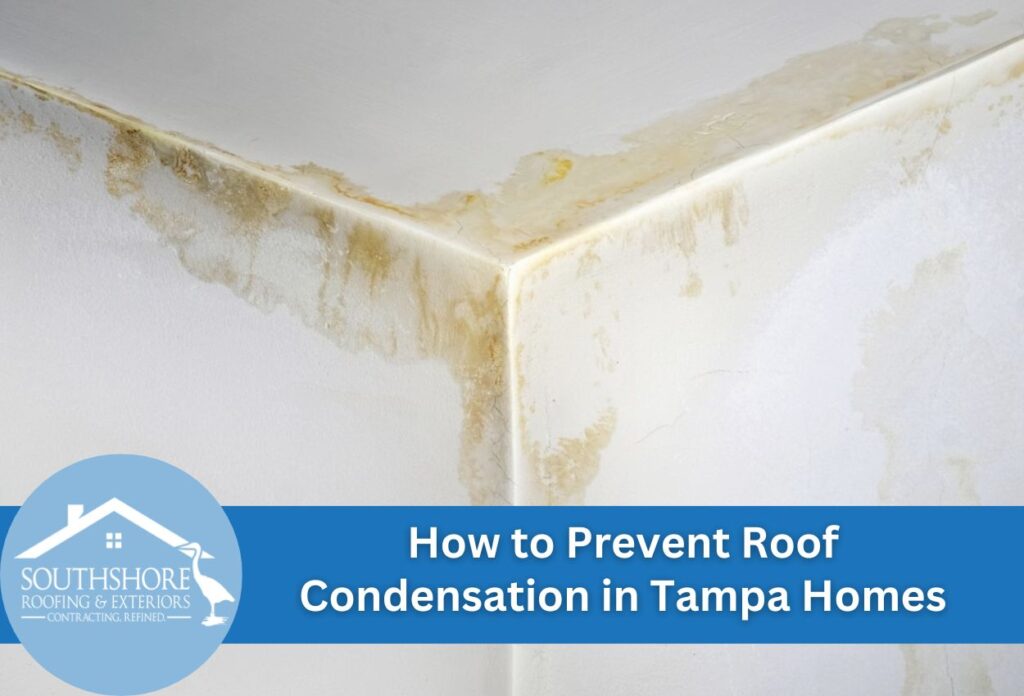
Water stains on ceilings and walls are the most common visible sign of condensation issues. These brownish or yellowish marks typically appear as rings or irregular patches that expand over time. Dark mold spots often accompany these stains, particularly in corners with limited air circulation. Peeling paint and wallpaper around these areas also signals that moisture has seeped into building materials.
Less obvious warning signs require closer attention but indicate serious roof moisture control problems. Musty odors throughout the house suggest mold growth within wall cavities or attic spaces where condensation has accumulated. Unexpectedly high energy bills can result from wet insulation losing its effectiveness, forcing heating and cooling systems to work harder.
Warped or sagging ceiling materials indicate prolonged exposure to condensation, while rust on metal fixtures suggests ongoing humidity issues that require immediate attention and potentially vapor barrier installation to resolve effectively.
Serious Problems that Condensation Causes to Your Home
Roof condensation creates devastating structural damage that threatens your home’s integrity and your family’s safety. When moisture becomes trapped in attic spaces, it immediately begins attacking wooden roof components, causing rot that weakens the entire roof structure. Rafters, trusses, and decking materials absorb this trapped moisture, leading to extensive damage that often requires complete roof reconstruction.
Damaged insulation is another expensive consequence of poor roof moisture control. Wet insulation cannot perform its function and may even become a breeding ground for harmful mold and mildew. This attic insulation problem forces heating and cooling systems to work overtime, dramatically increasing energy costs while failing to maintain comfortable indoor temperatures.
Health hazards from mold growth pose serious risks to occupants when condensation problems persist. These toxic organisms thrive in moist environments and release spores throughout the home’s air circulation system. Family members may experience respiratory issues, allergic reactions, and other health complications from prolonged exposure to contaminated indoor air quality.
The compromised roof structure becomes increasingly unstable as the roof damage caused by condensation spreads through wooden components. Metal fasteners corrode, shingles lose adhesion, and ceiling materials begin sagging under the weight of accumulated moisture. Without roof ventilation solutions and vapor barriers, these problems escalate rapidly, transforming minor condensation issues into major structural emergencies that threaten the entire building’s stability and require extensive reconstruction efforts.
How to Address and Prevent Roof Condensation
In Tampa’s hot and humid climate, preventing roof condensation requires a combination of ventilation, insulation, and vapor barriers working together. By creating the right balance of airflow and temperature control, you can protect your home from hidden moisture issues and extend the life of your roof.
Getting Air Moving Through Your Attic Space
Proper airflow through your attic space provides the most effective solution for preventing moisture buildup and eliminating condensation problems. Creating a balanced ventilation system requires strategic placement of intake and exhaust components that work together to maintain continuous air circulation throughout your roof structure.
Ridge vents installed along the peak of your roof serve as primary exhaust points, allowing warm, humid air to escape naturally through convection. These roof ventilation solutions work best when paired with soffit vents positioned under the roof’s eaves, which draw fresh outdoor air into the attic space. Exhaust fans can supplement natural ventilation in areas where air movement remains insufficient, particularly in complex roof designs with multiple levels or architectural features that block airflow.
Balancing intake and exhaust ventilation prevents the negative pressure that traps moisture inside attic spaces. The industry-standard rule for intake and exhaust ventilation requires equal amounts of both types, with soffit vents providing cool air entry points while ridge vents or powered exhausts remove heated air. This continuous air movement carries moisture away before condensation can form on cool surfaces.
Blocked or inadequate ventilation creates dead air zones where humidity accumulates rapidly. Regular inspections ensure that insulation hasn’t covered soffit vents and that ridge vents remain clear of debris. Proper roof moisture control depends on this unobstructed airflow working alongside effective vapor barriers and quality insulation to effectively prevent condensation.
Choosing and Installing the Right Insulation
Selecting appropriate insulation materials and installing them correctly prevents the temperature imbalances that create condensation problems in your attic space. The wrong insulation type or improper installation techniques often worsen moisture issues rather than solving them, making careful material selection and precise installation methods essential for effective roof moisture control.
Insulation not only keeps indoor temperatures comfortable but also prevents roof damage caused by condensation, which is a common issue in Florida’s humid climate. Common insulation materials include:
- Fiberglass Batts: One of the most widely used options, fiberglass batts are affordable and easy to install. They create a thermal barrier that helps regulate attic temperature, reducing the likelihood of warm, moist air meeting cooler roof surfaces. By minimizing this contact, fiberglass batts support roof moisture control and reduce the risk of water droplets forming on the underside of the roof deck.
- Rigid Foam Boards: Rigid foam boards are another excellent choice, especially for homeowners seeking higher R-values in a thinner layer of material. These boards resist moisture, making them highly effective at preventing roof damage caused by condensation. Their dense composition creates a tight barrier that limits air movement and moisture buildup in attics.
- Spray Foam Insulation: Spray foam has superior sealing properties compared to other options by expanding to fill cracks, gaps, and hard-to-reach areas. This minimizes air leaks and provides consistent protection against condensation. In Tampa’s hot and humid climate, spray foam can be particularly effective in achieving roof moisture control, since it reduces the chance of humid air interacting with cooler roof surfaces.
- Blown-In Insulation: Blown-in insulation is an excellent option for Tampa homeowners looking to prevent roof condensation. Similar to spray foam options, this insulation easily fills irregularly shaped spaces, creating even coverage that helps regulate attic temperatures. By keeping warm, humid air from meeting cooler roof surfaces, blown-in insulation reduces moisture buildup and protects against roof damage. When paired with proper ventilation, it provides reliable roof moisture control and helps extend the life of your roofing system.
Common insulation mistakes include compressing batts or rolls during installation, which reduces their thermal effectiveness and creates cold spots where condensation forms easily. Gaps between insulation sections allow warm air to reach cool surfaces, while overstuffing spaces prevents air circulation. Installing insulation that blocks soffit vents eliminates crucial airflow needed for roof ventilation solutions to work effectively.
Proper insulation techniques maintain consistent thermal barriers that prevent warm indoor air from reaching cold roof surfaces. Fiberglass batts should fit snugly between joists without compression, while blown-in insulation provides seamless coverage that eliminates gaps completely. Rigid foam boards work well in areas requiring precise fitting around obstacles like pipes or electrical fixtures.
Additionally, the insulation must allow attic temperatures to remain closer to outdoor temperatures rather than indoor temperatures. This temperature balance reduces the likelihood of condensation forming when humid air encounters roof surfaces. Before adding insulation, any air leaks should be sealed, and a vapor barrier should be installed on the warm side of the thermal envelope to prevent moisture migration into attic spaces.
Adding Vapor Barriers to Block Moisture
Vapor barriers create essential moisture control by preventing humid indoor air from seeping into attic spaces where condensation forms on cold surfaces. These thin plastic or foil membranes block water vapor transmission through building materials, working alongside insulation and ventilation to provide comprehensive roof moisture control.
Polyethylene plastic sheeting is a common vapor barrier material, typically measuring 6 mils thick for residential applications. Aluminum foil-faced barriers offer superior moisture resistance and radiant heat reflection, making them particularly effective in Florida’s hot climate. Kraft paper backing on some insulation products provides basic vapor resistance but lacks the complete protection needed for serious attic condensation problems.
The vapor barrier should be installed with the material on the warm side of the insulation, facing the heated interior spaces rather than the cold attic area. The barrier must cover the entire ceiling area with overlapping seams sealed using appropriate tape designed for vapor barrier applications. Every gap in the barrier, including electrical outlets, light fixtures, and plumbing vents, needs careful sealing to maintain effectiveness.
Complete coverage is critical for preventing roof damage, as even small gaps allow significant moisture into the attic. Professional installation ensures proper sealing techniques and addresses complex areas around HVAC ducts, chimneys, and structural elements where moisture typically finds entry points into attic spaces, creating lasting protection against humidity.
Professional Solutions and When to Call for Help
Complex condensation problems often require professional intervention when standard roof ventilation solutions and basic insulation improvements fail to resolve persistent moisture issues. Advanced moisture control methods include roof coatings that create seamless barriers against water infiltration while reflecting heat to reduce temperature differentials that cause condensation to form.
Whole-house ventilation systems provide comprehensive solutions for severe humidity problems that affect entire structures. These sophisticated systems include energy recovery ventilators that exchange stale indoor air with fresh outdoor air while maintaining temperature control. Professional-grade dehumidification equipment can address extreme moisture conditions that overwhelm traditional vapor barriers and standard attic ventilation.
Several warning signs indicate when condensation issues exceed DIY capabilities and require a professional roofing contractor. Widespread mold growth throughout multiple rooms suggests systemic moisture problems that need comprehensive evaluation and remediation. Structural damage, including sagging ceiling materials, visible wood rot, or compromised roof decking, requires an immediate professional assessment to prevent safety hazards.
Recurring condensation problems despite insulation and ventilation improvements signal complex issues that need professional diagnosis. Experienced contractors can identify hidden air leaks, inadequate vapor barriers, or roof design problems that allow moisture infiltration. A professional evaluation is essential when roof damage caused by condensation continues spreading or when attic insulation problems persist after attempted repairs, ensuring comprehensive solutions that address underlying causes rather than temporary fixes.
Prevent Roof Condensation Damage in Tampa
If you’ve noticed signs of roof condensation in your attic, don’t wait for the damage to spread to other parts of your home. SouthShore Roofing & Exteriors specializes in combating roof condensation issues, ensuring your home remains safe, dry, and comfortable. Our team is equipped with the latest technology and methods to effectively manage and prevent moisture accumulation in your attic. We can add vapor barriers, inspect and install new insulation, and seal air leaks to keep your home in top shape.
Remember, dealing with roof condensation is not just a DIY task. To ensure your home is protected from the risks of moisture damage, calling in the experts is your best choice. Don’t compromise on the health of your roof and, ultimately, your home. Call SouthShore Roofing & Exteriors at (813) 400-3329 for a thorough inspection and tailored solutions that last.