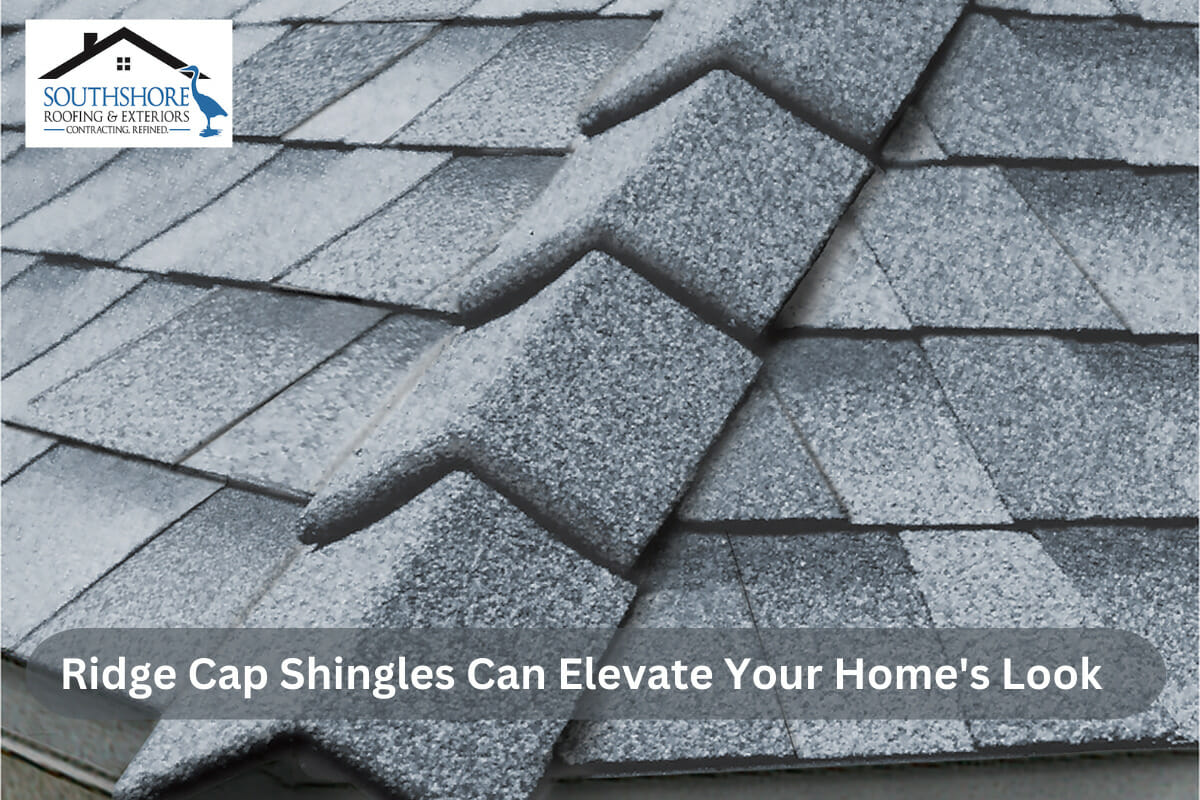


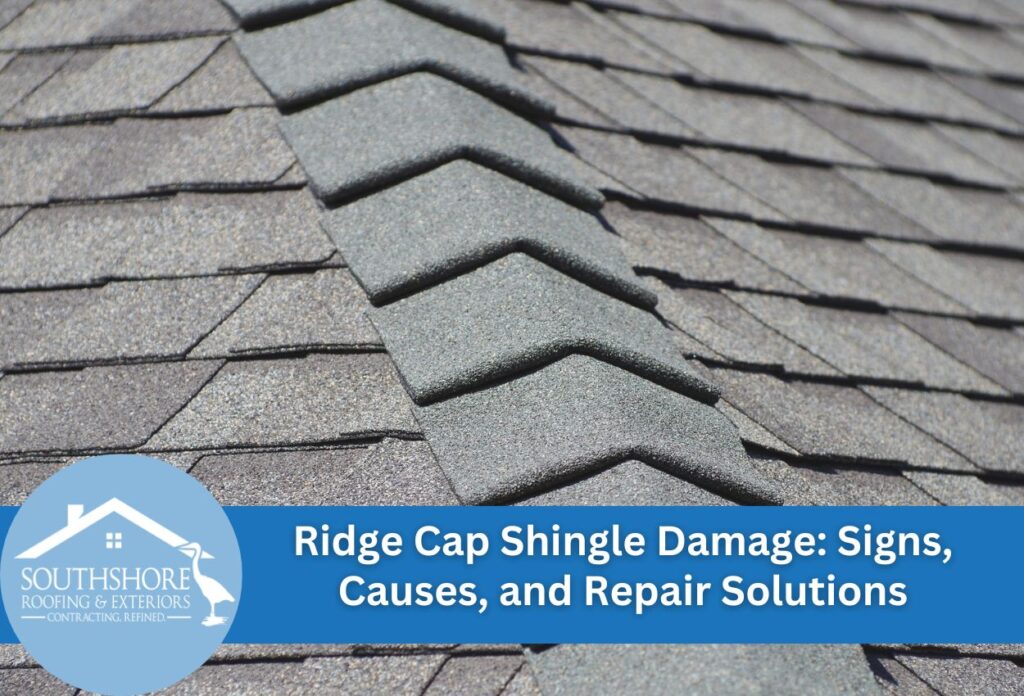

Ridge cap shingles serve as the final line of defense along your roof’s peak, protecting one of the most vulnerable areas where two roof planes meet. When ridge cap shingle damage occurs, it creates an open pathway for leaks that can lead to extensive interior damage and expensive repairs. Understanding how to identify compromised ridge caps early can save homeowners from dealing with rotted decking, damaged insulation, and structural issues down the road.
Damaged ridge cap shingles often display obvious warning signs that homeowners can spot from ground level. Cracking appears as visible splits running through the shingle material, while curling causes the edges to lift and create gaps. Missing pieces leave exposed areas along the ridge line, and significant granule loss reveals the underlying mat material. These visual indicators signal that your roof’s protective barrier has been compromised.
Beyond weather protection, ridge caps play an important role in maintaining proper attic ventilation. When storm damage roof repair becomes necessary, the ridge area frequently requires attention due to its exposed position. Asphalt shingle ridge caps face constant exposure to wind, rain, and temperature fluctuations, making regular inspection essential for maintaining your roof system’s structural integrity and preventing water damage throughout your home.
Common Causes of Ridge Cap Shingle Deterioration in Florida
Florida’s harsh climate creates unique challenges for ridge cap shingles, with several environmental factors working together to accelerate deterioration. Our state’s intense UV radiation breaks down asphalt shingle ridge caps at an accelerated rate, causing them to become brittle and prone to cracking. High winds from frequent thunderstorms and hurricanes place tremendous stress on ridge areas, where damaged ridge cap shingles often begin lifting at the edges before completely detaching from the roof.
Temperature fluctuations between scorching summer heat and cooler winter months cause ridge caps to expand and contract repeatedly, weakening the material over time. Heavy rainfall and humidity get into small cracks, leading to faster degradation of the underlying adhesive and creating conditions where ridge vent repair becomes necessary sooner than expected.
Installation errors represent another significant cause of premature ridge cap failure. Inadequate nail placement, insufficient overlap between shingles, or using incorrect fasteners can compromise the entire ridge system. Poor maintenance practices, such as walking on ridge areas during repairs or failing to clear debris that traps moisture, accelerate the deterioration process. When storm damage roof repair becomes necessary, these pre-existing installation issues often make the problem worse, requiring complete roof ridge replacement rather than simple repairs to restore proper protection.
Inspecting Your Ridge Caps for Damage
Homeowners can perform effective ridge cap assessments using binoculars or by positioning themselves at various angles around their property to examine the roof’s peak. Start by looking for obvious signs like missing asphalt shingle ridge caps, visible gaps between sections, or pieces hanging loosely from the ridge line. Document any cracking, curling edges, or areas where granules appear significantly worn away, as these indicate damaged ridge cap shingles requiring professional attention.
Check for water stains on exterior walls near the roofline or inside the attic space directly below the ridge area, which often signal ongoing moisture intrusion. Look for lifted or displaced shingles along the ridge, particularly after severe weather, when storm damage roof repair becomes necessary. Note any visible nail exposure or missing fasteners that could allow wind to uplift the shingles.
Homeowners should immediately contact roofing contractors when they observe multiple missing ridge caps, extensive cracking across several sections, or obvious structural damage. Minor issues like single loose shingles or small cracks may warrant closer inspection, but climbing onto steep surfaces poses significant safety risks. Professional roofers have the proper equipment and training to safely assess whether ridge vent repair or a complete roof ridge replacement would provide the most effective solution for protecting your home’s structural integrity.
DIY Repair Options vs. Professional Ridge Cap Replacement
Homeowners facing ridge cap shingle damage often wonder whether they can address the problem themselves or need professional intervention. Simple temporary measures can help prevent immediate leaks while waiting for expert repairs. Applying roofing cement to small cracks or securing loose asphalt shingle ridge caps with additional fasteners can provide short-term protection during emergencies. Placing tarps or plastic sheeting over exposed areas helps redirect water away from vulnerable sections until permanent repairs can be completed.
These temporary fixes work best for minor issues affecting single damaged ridge cap shingles or small sections along the ridge line. However, homeowners should understand that DIY solutions for this important part of the roofing system are temporary to stop immediate damage rather than permanent repairs.
Complex scenarios requiring professional expertise include structural damage affecting the roof decking, situations involving multiple ridge cap replacements across extensive areas, and projects requiring ridge vent repair or integration. Storm damage roof repair often reveals underlying issues that go beyond visible surface problems, needing specialized knowledge of proper installation techniques and building codes. Professional contractors have the tools, materials, and experience needed to complete roof ridge replacements while ensuring proper ventilation and long-term durability that temporary fixes cannot provide.
The Ridge Cap Replacement Process and Material Considerations
Professional ridge cap replacement begins with careful removal of damaged ridge cap shingles to assess the underlying structure and determine the extent of necessary repairs. Roofers strip away compromised materials, taking care not to damage surrounding shingles or the roof decking below. The ridge line receives a thorough cleaning to remove old adhesive, debris, and any remaining fasteners that could interfere with the proper installation of new materials.
Once the ridge area is prepared, contractors inspect the decking for signs of water damage or structural compromise that might require repair before proceeding. Proper sealing techniques involve applying high-quality underlayment and weatherproofing materials along the ridge line to create multiple barriers against leaks. This preparation phase is important for ensuring the long-term performance of the new ridge cap system.
Material selection for roof ridge replacement involves choosing between standard 3-tab asphalt shingle ridge caps and architectural options that provide enhanced durability and curb appeal. Architectural ridge caps offer superior wind resistance and longer lifespan, making them particularly suitable for Florida’s challenging weather conditions. The selected materials must complement the existing roof design while providing adequate protection against UV radiation, high winds, and heavy rainfall. Professional installation includes proper overlap spacing, correct fastener placement, and integration with any existing ridge vent repairs to maintain the best possible attic ventilation throughout the completed system.
Preventing Future Ridge Cap Damage Through Proper Maintenance
Establishing a regular inspection routine helps homeowners catch ridge cap problems before they develop into expensive repairs requiring a complete replacement. Schedule visual inspections twice a year, preferably in spring and fall, to identify loose or damaged ridge cap shingles that may have shifted during seasonal weather changes. After severe storms, immediate assessment of the ridge line can reveal new damage while it remains manageable through targeted repairs rather than extensive storm damage roof repair projects.
Keep gutters clean and properly functioning to prevent water backup that can affect ridge areas, and trim overhanging tree branches that could scrape against asphalt shingle ridge caps during windy conditions. Remove accumulated debris from roof valleys and ridge areas promptly, as trapped organic matter holds water against the surface like a sponge and accelerates the deterioration of roofing materials.
Proactive measures against storm damage include ensuring adequate attic ventilation to prevent moisture buildup that weakens ridge cap adhesion over time. Address nearby tree hazards by removing dead branches or entire trees that pose threats during severe weather events. Consider installing impact-resistant ridge caps in areas prone to hail damage, and maintain proper caulking around penetrations near the ridge line. When minor issues appear, prompt ridge vent repair prevents small problems from escalating into major structural concerns. These preventive steps significantly extend the lifespan of ridge cap systems while reducing the likelihood of emergency repairs during extreme weather conditions.
When Storm Damage Affects Your Ridge Caps
Severe weather can cause significant damage to ridge caps, often leaving homeowners uncertain about insurance coverage and what steps should be taken next. Roof repairs from storm damage involving ridge caps require quick attention since these components protect the most vulnerable area of your roof structure. Understanding how to document damaged ridge cap shingles properly and knowing what your insurance policy typically covers helps you get the right compensation for any necessary repairs.
Insurance companies generally cover storm-related ridge cap damage when the destruction results from covered perils like wind, hail, or fallen trees. Coverage typically includes replacement of asphalt shingle ridge caps that show clear evidence of impact from debris kicked up by a storm, such as missing sections, cracked materials from hail strikes, or displacement from high winds. However, documentation plays an important role in successful claims processing, requiring photographs and professional assessments that clearly link the damage to specific weather.
Emergency response becomes important immediately following severe weather to prevent leaks through compromised ridge areas. Temporary protective measures help minimize interior damage while arranging professional evaluation, but safety considerations make immediate roof access dangerous during or shortly after storms. Property owners should contact experienced roofing contractors who can safely assess the extent of ridge vent repair needs and provide emergency tarping services when complete roof ridge replacement cannot be completed immediately due to weather conditions or material availability.
Protect Your Home with Expert Ridge Cap Shingle Repair from SouthShore Roofing & Exteriors
Are you noticing signs of wear or damage on your ridge cap shingles, such as cracking, curling, or missing pieces? Don’t wait for the problem to escalate and jeopardize the structural integrity of your roof. SouthShore Roofing & Exteriors specializes in diagnosing and repairing ridge cap shingle damage, ensuring your home remains safe and dry, especially in Tampa’s unpredictable weather. Whether it’s UV damage, installation errors, or storm damage, our experienced team is equipped to handle it all.
If you’re concerned about the condition of your roof, call us today at (813) 400-3329 for a professional evaluation and quick repair.