 Instant Quote
Tampa residential roof drainage problems can cause serious damage to homes when left unaddressed. Heavy rainstorms and Florida’s intense weather patterns put significant stress on residential drainage systems throughout the area. Homeowners often miss early warning signs until water damage becomes wipespread and expensive to repair.
Proper roof drainage keeps water flowing away from the home’s foundation and structure. When gutter repair needs are ignored or when drainage systems fail, water finds alternative paths that lead to interior damage. Many Tampa residents discover drainage issues only after noticing obvious problems like ceiling stains or standing water on their roof.
Recognizing the early indicators of drainage failure helps prevent small issues from becoming major concerns. Two warning signs consistently appear in homes experiencing drainage problems: interior water stains and exterior water pooling. These symptoms indicate that roof leak repair services may be necessary to restore proper water flow and protect the home’s structural integrity.
Understanding these warning signs means homeowners can take action before drainage problems escalate and affect multiple areas of the property.
Why Tampa’s Weather Makes Roof Drainage Critical
Tampa’s subtropical climate creates exceptional challenges for residential roof drainage systems that homeowners in other regions rarely face. The area receives approximately 46 inches of rainfall annually, with the majority concentrated during the intense summer months, when afternoon thunderstorms can dump several inches of water in just hours. These sudden downpours test even well-maintained roof drainage systems and can quickly overwhelm inadequate gutter installation and repair work.
Hurricane season brings additional stress to residential downspout solutions across the Tampa Bay region. High winds combined with torrential rainfall create perfect conditions for drainage system failures. Storm debris frequently clogs gutters and downspouts, while wind damage can disconnect or misalign drainage components just when they’re needed most.
The consistently high humidity levels throughout the year compound drainage issues by slowing evaporation. Water that would typically dry quickly in arid climates lingers on roof surfaces and in gutters, increasing the likelihood of leaks and structural damage. This prolonged moisture exposure makes roof water damage prevention especially important for Tampa homeowners.
These weather patterns explain why routine maintenance and prompt roof leak repair services are essential investments rather than optional upgrades. Tampa’s climate doesn’t forgive drainage system weaknesses, making proactive care one of the most effective strategies for protecting residential properties from water damage.
Flat Roof Drainage Challenges Tampa Homeowners Face
Flat roof drainage systems present specific obstacles for Tampa residents because of their precise engineering. Unlike sloped roofs that use gravity to naturally direct water toward gutters, flat roofs depend on carefully planned drainage patterns and properly positioned drains to prevent water accumulation. Even minor settling or structural shifts can disrupt water flow, leading to ponding and eventual leaks.
The design of flat roof drainage systems requires adequate slope toward drainage points, typically at least 1/4 inch per foot. When this slope becomes compromised through settling or poor initial installation, water begins pooling in low areas instead of flowing toward drains. These standing water areas create constant pressure on roofing materials and provide entry points for moisture infiltration.
Drain placement is critical on flat surfaces because water has limited natural flow options. Tampa residential roof drainage problems frequently stem from insufficient drain capacity or drains positioned in areas that don’t align with actual water flow patterns. Heavy rainfall quickly reveals these design flaws when drainage systems cannot handle the volume of water.
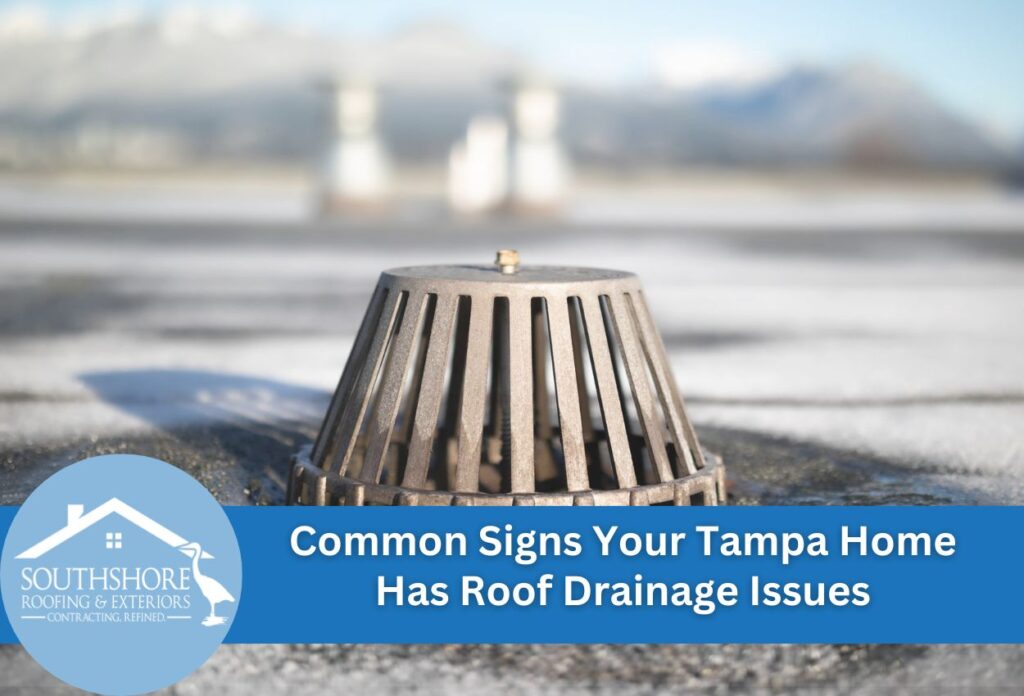
Common flat roof drainage failures include clogged drains filled with debris, inadequate slope creating permanent puddles, and blocked scuppers that prevent overflow drainage. These issues often develop gradually, making early detection difficult until accumulated moisture problems affect the entire roofing system.
Gutter Problems That Lead to Major Water Damage
Gutters pulling away from homes is one of the most serious drainage failures Tampa residents encounter. This separation typically occurs when fasteners corrode or when gutters become overloaded with water and debris during heavy storms. When gutters detach from the roofline, they lose their ability to channel water away from the foundation, allowing runoff to cascade directly down exterior walls and pool around the home.
Signs of improper gutter installation and repair include visible gaps between gutters and fascia boards, sagging sections that hold standing water, and loose or missing brackets. These installation defects prevent proper water flow and create stress points where complete failure may occur during the next significant rainfall. Homeowners should watch for gutters that appear to bow outward or show gaps where sections connect.
Undersized gutters create cascading problems that extend far beyond the roof system itself. When gutters cannot handle the volume of water flowing from the roof surface, overflow occurs regularly during storms. This excess water saturates soil around the foundation, potentially causing settlement issues and basement flooding. The constant moisture exposure also damages exterior siding, trim, and landscaping adjacent to the home.
Foundation damage from inadequate residential downspouts develops over time as water repeatedly soaks the soil supporting the home’s structure. This moisture infiltration can lead to foundation cracks, uneven settling, and eventual structural problems requiring extensive repairs and foundation remediation to restore drainage function.
Downspout Solutions for Better Water Management
Effective downspout placement requires looking into Tampa’s rainfall intensity and drainage patterns around your home. Downspouts must be positioned to handle the volume of water collected from roof surfaces during heavy storms while directing that water to safe discharge areas. The spacing between downspouts becomes critical on longer gutter runs, as inadequate downspout frequency creates bottlenecks that lead to overflow during heavy rainfall.
Correctly sized residential downspouts depend on the roof area being drained and local precipitation rates. Standard residential downspouts are 3-by-4 inches, but homes with large roof areas or flat roof drainage systems may require larger 5-inch round downspouts to handle increased water volume. Undersized downspouts create backups in gutter systems, leading to overflow that defeats the entire drainage strategy.
Extension options are sometimes necessary to water away from foundation areas where damage typically occurs. Downspout extensions should carry water at least 5 feet from the home’s foundation, with longer extensions necessary on sloped lots where water might flow back toward the structure. Flexible extensions work well for temporary solutions, while buried drainage lines offer permanent water management for properties with challenging soil conditions or uneven terrain.
Underground drainage improvements connect downspouts to collection systems that transport water to appropriate discharge points away from the home. These systems prevent the erosion and foundation problems associated with surface water flow while maintaining a clean exterior around the property.
Preventing Water Damage Through Regular Gutter Maintenance
Regular maintenance provides effective protection against Tampa residential roof drainage problems. Homeowners can perform monthly visual inspections of gutters and downspouts to identify debris accumulation, loose connections, and early signs of wear. These routine checks should include examining flat roof drainage systems for standing water, testing downspout flow, and clearing minor blockages from drain openings.
Seasonal maintenance tasks are even more important during Tampa’s intense summers. Before hurricane season arrives, homeowners should secure loose gutter sections, trim overhanging branches that could clog drainage systems, and verify that downspouts direct water adequately away from foundations. After major storms, quick inspections can spot damage while repairs are manageable rather than waiting until problems worsen.
Professional maintenance services have expertise that goes beyond basic homeowner capabilities and equipment to identify potential drainage failures before they cause water damage. Licensed contractors can assess gutter installation and repair needs, evaluate the slope on flat roofs, and recommend system upgrades that improve overall drainage performance. These professionals recognize subtle warning signs that untrained observers typically miss.
Preventive roof leak repair services address issues during routine maintenance visits, replacing worn seals, adjusting drainage slopes, and reinforcing vulnerable connection points. This prevents water damage and prevents emergency repairs that disrupt daily life and strain household budgets significantly more than scheduled maintenance programs.
When to Call Tampa Roofing Professionals for Help
Certain warning signs indicate that Tampa residential roof drainage problems require immediate professional intervention rather than homeowner repairs. Water stains appearing on interior ceilings or walls signal that moisture has already penetrated the roofing system and may be causing hidden structural damage. These stains often expand quickly during heavy rain, indicating active leaks that need an expert eye to locate and prevent further infiltration.
Standing water remaining on flat roofs for more than 48 hours after rainfall represents a serious drainage failure requiring professional evaluation. This ponding creates constant pressure on roofing materials and indicates that drainage slopes or drain positioning needs to be corrected. Similarly, gutters that overflow consistently during moderate rainfall suggest that the repair work needed requires specialized equipment and expertise.
Professional roof drainage evaluations begin with comprehensive inspections using moisture detection equipment and drainage flow testing to identify all problem areas. Roofing contractors assess the entire system, including gutters, downspouts, roof slopes, and drain positioning, to develop complete solutions rather than temporary fixes. Professionals often find multiple interconnected issues that require coordinated repairs to restore drainage and protect the home’s structural integrity. They provide detailed reports explaining necessary repairs and timeline expectations for restoration work.
During professional repairs, contractors typically address underlying causes rather than just visible symptoms. This comprehensive approach includes upgrading residential downspouts, correcting drainage slopes, and implementing roof water damage prevention measures.
Resolve Your Tampa Residential Roof Drainage Problems with SouthShore Roofing & Exteriors
If you’ve spotted signs of roof drainage issues, such as water stains, pooling on your roof, or gutters pulling away from your home, it’s time to call the pros for help. Tampa’s weather patterns, with heavy rainfall and frequent storms, can exacerbate these gutter issues and accelerate damage.
At SouthShore Roofing & Exteriors, we diagnose and solve all types of roof drainage problems, from gutter installation and repair. Call us today at (813) 400-3329 to schedule a professional evaluation and ensure your home is protected from water damage.