
 Instant Quote
Key Takeaways:
- Diagnose White Causes: If your roof is turning white, identify if it’s algae (streaks in shaded/humid areas) or chalky mineral deposits from hard water.
- Clean Carefully: Remove white stains using gentle, low-pressure washing and specialized roof-safe solutions. Never use harsh pressure washing, which damages shingles and voids warranties.
- Prevent Future Whitening: Inspect your roof twice a year, clean gutters, and trim branches. Consider zinc/copper strips or professional antimicrobial applications to inhibit growth.
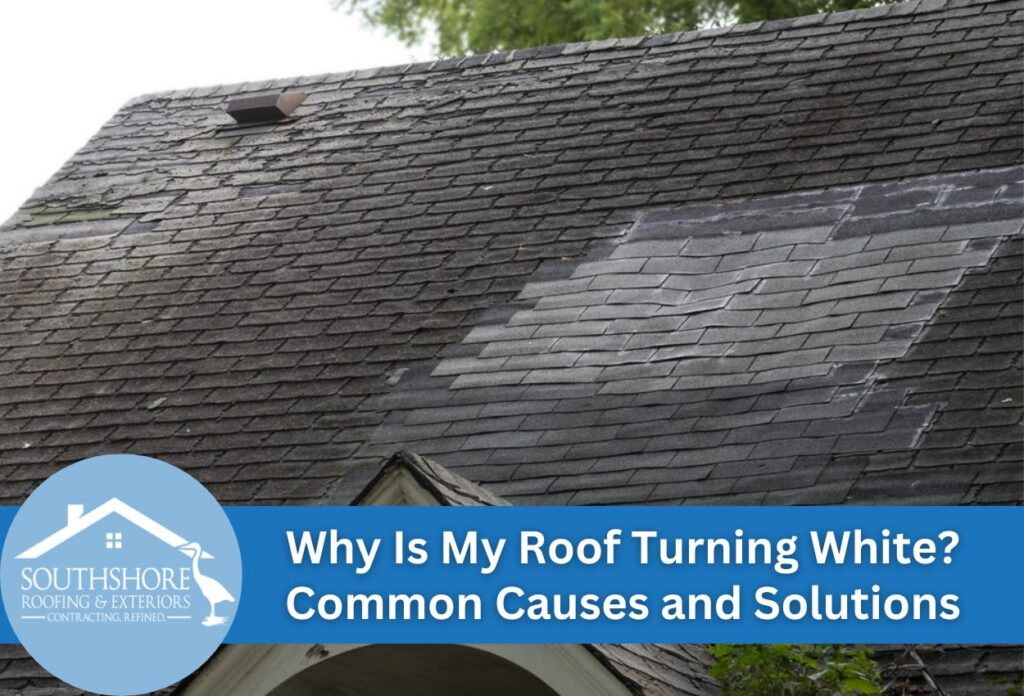
Noticing white discoloration on roof shingles can be alarming for any homeowner. The white stains or patches that appear across a roof’s surface typically signal one of several common roofing issues that require attention.
The white appearance on roofs stems from various sources, each with distinct characteristics. Algae growth on the roof often manifests as white or light-colored streaks, particularly in humid climates. Calcium deposits on the roof can create chalky white residue, especially in areas with hard water. Environmental factors, oxidation of roofing materials, and salt accumulation also contribute to the causes of roof discoloration. Some white staining results from normal weathering of protective granules, while other cases indicate active biological growth that can damage shingles over time.
Identifying the specific cause behind the discoloration determines the appropriate response, whether that involves targeted roof cleaning and maintenance or more extensive intervention. Different types of white stains require different treatment approaches to effectively resolve the issue and prevent further deterioration.
Algae and Biological Growth Creating White Streaks
Biological organisms frequently grow on roof surfaces and produce white or light-colored streaks across shingles. Certain algae species, lichens, and fungal growth create pale patches that stand out against darker roofing materials. These organisms feed on the organic materials found in asphalt shingles and thrive in specific environmental conditions. The white stains on roof shingles from biological sources often appear as irregular streaks or blotchy patterns that gradually expand over time.
Humidity plays an importantrole in encouraging algae growth on the roof. Roofs that remain damp due to morning dew, frequent rain, or poor drainage become ideal habitats for these organisms. Shaded areas receive less direct sunlight and dry more slowly, creating perfect conditions for colonization. Trees overhanging a roof deposit leaves and organic debris that trap moisture against shingles, further accelerating biological growth. North-facing roof sections typically experience more pronounced discoloration because they receive limited sun exposure throughout the day. When debris accumulates in valleys and against chimneys, moisture retention increases significantly, fostering white organic growth in those concentrated areas.
Mineral Deposits and Hard Water Staining
Hard water contains elevated levels of calcium, magnesium, and other dissolved minerals that leave behind visible white residue as water evaporates. When rainwater runoff or sprinkler systems repeatedly contact the surface of the roof, these minerals accumulate over time and create crusty white deposits. The white stains on roof shingles from mineral buildup appear as chalky, powdery patches that differ in texture from biological growth. Calcium deposits on the roof typically concentrate along specific paths where water consistently flows and pools before evaporating.
Certain roof areas experience heavier mineral accumulation based on drainage patterns and water exposure. Edges near gutters, areas beneath roof valleys, and sections directly hit by sprinkler systems show more pronounced white crusting. When automated irrigation systems spray water onto roofing materials, the repeated wetting and drying cycles intensify mineral deposit formation. Low-slope sections where water stands briefly before evaporating develop thicker residue layers compared to steeper portions where runoff moves quickly.
Shingle Weathering and Material Breakdown
Asphalt shingles undergo natural aging that affects their appearance and protective qualities over time. The granules embedded in the shingle surface gradually wear away from exposure to the elements, revealing the lighter-colored asphalt base material underneath. This granule loss creates white or chalky patches that signal material breakdown. The protective coating on shingles oxidizes when exposed to ultraviolet radiation, causing the surface to lighten and take on a bleached appearance that differs from the original color.
Environmental conditions accelerate the rate at which roofing materials deteriorate and develop white discoloration. Intense sun exposure causes the asphalt binders to dry out and lose their flexibility, resulting in a chalky surface texture. Temperature fluctuations between hot days and cool nights create expansion and contraction cycles that stress shingle materials and hasten granule separation. Roofs in locations with extreme weather patterns experience faster aging than those in moderate climates. When white stains on roof shingles result from weathering rather than biological or mineral causes, they indicate that the roofing system is approaching the end of its functional lifespan and may require professional evaluation for replacement.
Salty Air and Coastal Environment Effects
Properties located near oceans and large bodies of saltwater face unique challenges with white crystalline formations developing on the surface of the roof. Salt-laden air from coastal breezes carries microscopic sodium chloride particles that settle onto shingles and tiles. As ocean spray evaporates, these salt deposits accumulate and create distinctive white crusty patches across roofing materials. The white stains on roof shingles in waterfront locations differ from other roof discoloration causes because the crystalline formations have a sparkling, granular texture that becomes more visible after periods without rain.
Different roofing materials respond to salt exposure in varying ways. Asphalt shingles absorb salt moisture, which accelerates granule deterioration and creates chalky white areas as protective layers break down. Metal roofing develops white corrosion spots where salt reacts with the surface coating. Clay and concrete tiles accumulate visible salt deposits that etch into the porous material over time. Homes situated within a few miles of coastlines experience these effects most dramatically, with properties facing prevailing ocean winds showing heavier accumulation patterns. Regular roof cleaning and maintenance become essential for waterfront properties to prevent long-term damage from continuous salt exposure.
Effective Cleaning Methods and When to Act
Addressing white stains on roof shingles requires careful consideration of the cleaning approach to avoid causing additional damage. Gentle low-pressure washing with specialized cleaning solutions designed for roofing materials effectively removes algae growth on the roof without compromising the shingles’ structural integrity. Many manufacturers recommend specific cleaning products that target biological growth while preserving the protective granules and avoiding warranty violations. Harsh pressure washing should be avoided as it strips away granules and shortens shingle lifespan significantly.
Homeowners must distinguish between surface-level cosmetic issues and signs of structural problems requiring professional assessment. White discoloration from algae or calcium deposits on the roof typically represents a treatable appearance concern that responds well to appropriate cleaning techniques. However, white staining accompanied by curling shingles, missing granules, or visible material deterioration indicates underlying damage that requires immediate attention. When roof discoloration causes stem from advanced weathering or material breakdown, professional contractors can evaluate whether targeted repairs or full replacement provides the most cost-effective solution for protecting the home.
Preventive Maintenance to Keep Your Roof Looking Its Best
Establishing a consistent inspection routine helps identify white stains on roof shingles before they become extensive problems. Homeowners should examine the surface of the roof at least twice a year, preferably during spring and fall, to spot early signs of algae growth on the roof or calcium deposits on the roof. Regular gutter cleaning prevents water backup that creates moisture conditions favoring biological growth. Trimming overhanging branches reduces shade and organic debris accumulation that contributes to the causes of roof discoloration. Installing zinc or copper strips along roof ridges releases metal ions during rainfall that naturally inhibit algae colonization.
Professional roof cleaning and maintenance treatments provide long-lasting protection against recurring white discoloration. Specialized antimicrobial applications create barriers that prevent algae spores from establishing colonies on shingle surfaces. Sealant products designed for roofing materials enhance water shedding and reduce mineral deposit formation in areas prone to hard water exposure. Contractors can apply protective coatings that extend shingle life while maintaining the original appearance.
Protect Your Home with Expert Roof Maintenance from SouthShore Roofing & Exteriors
If you’re noticing white stains or discoloration on your roof, it’s important to act swiftly to prevent further damage. At SouthShore Roofing & Exteriors, we specialize in identifying and treating the root causes of white stains, from algae growth to mineral deposits. Ignoring these signs can lead to expensive repairs down the line. Don’t let roof discoloration compromise the structural integrity and appearance of your home.
Ready to get your roof back in top condition? Call SouthShore Roofing & Exteriors now at (813) 400-3329 or visit our website at https://southshorecontractorstampa.com/ for more information and to schedule a consultation. Don’t wait until it’s too late, maintain your roof’s beauty and functionality today!