 Instant Quote
Why You Should Remove Ponding Water From a Commercial Roof Before Damage Occurs
Key Points:
- Ponding water on a commercial roof requires immediate action to prevent severe structural damage, membrane failure, and expensive interior leaks.
- Ignoring ponding water accelerates membrane deterioration, creates weak points, and leads to an expensive full roof replacement rather than simple repairs.
- Address root causes like clogged drains or poor slope with professional help for long-term protection.
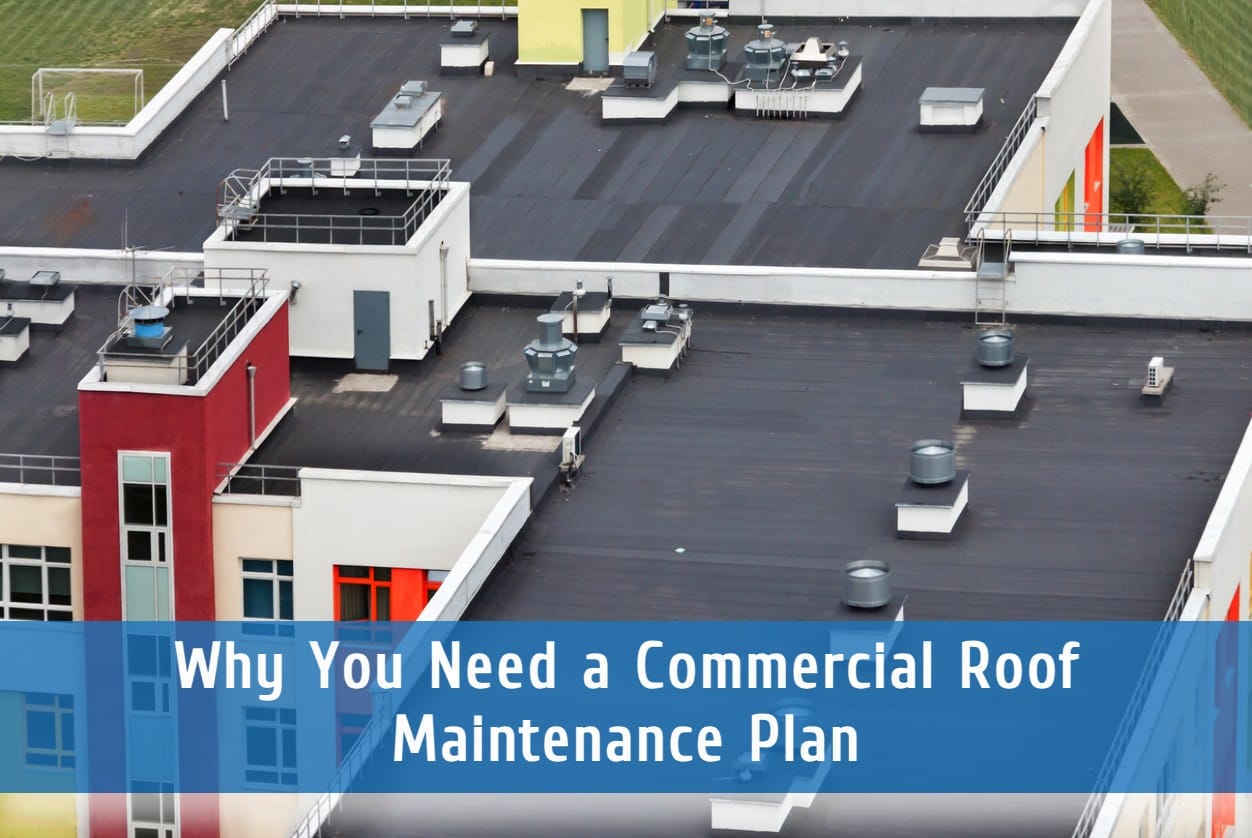
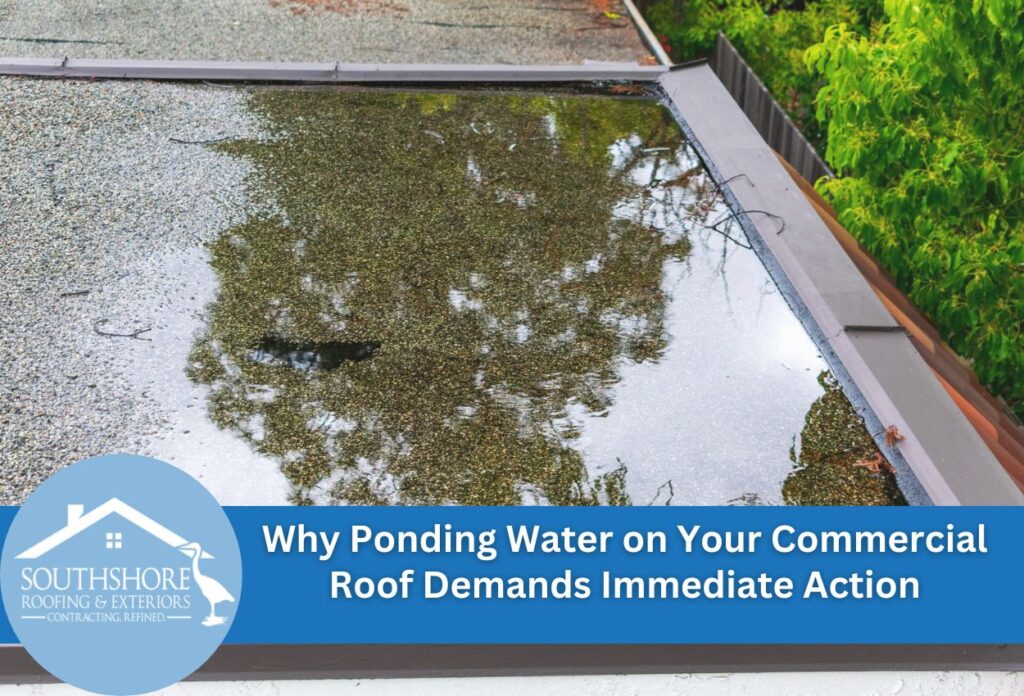
Ponding water occurs when drainage systems fail to effectively channel rainwater away from flat and low-slope commercial roofing systems. This standing water accumulates due to inadequate roof slope, blocked drains, or structural settling that creates depressions where water pools. In the roofing industry, a standard rule states that any water remaining on a roof’s surface for more than 2 days after rainfall officially becomes a ponding water problem that requires immediate attention.
Commercial roof drainage problems can lead to expensive consequences for property owners who delay action. Standing water significantly accelerates membrane deterioration, increases structural load beyond design specifications, and creates ideal conditions for mold growth and pest infestations. The effects of ponding water on a commercial roof extend far beyond surface damage, penetrating through roofing materials and compromising the building’s structural integrity. Implementing proper commercial roof maintenance solutions and standing water roof repair prevents minor drainage issues from turning into major system failure that threatens business operations and require complete roof replacement.
Structural Damage That Threatens Your Building’s Integrity
Standing water creates enormous structural stress that commercial roofing systems were never designed to handle. Water weighs approximately 8.34 pounds per gallon, meaning even modest ponding areas can add thousands of pounds of concentrated weight to specific sections of the roof. This excessive load strains the roof deck, support beams, and the entire structural framework beyond their engineered capacity. Commercial roof drainage problems make these issues worse as water accumulates in larger quantities during heavy rainfall.
The progressive weakening process begins immediately when water remains on the roof’s surface. Roofing materials gradually deteriorate under constant exposure to moisture while underlying structural components experience ongoing stress from added weight. Support beams begin to sag, creating deeper depressions that trap more water and accelerate the cycle of damage. This dangerous progress can lead to catastrophic roof collapse that endangers occupants and destroys valuable equipment. This means that commercial roof maintenance solutions must address both immediate water removal and long-term structural reinforcement to prevent expensive failure.
Membrane Deterioration and Expensive Roof Replacement Costs
Constant moisture exposure from ponding water accelerates the rate that a roofing membrane will breakdown. Commercial roofing materials experience rapid deterioration when submerged in standing water, leading to cracking, splitting, and premature aging that drastically shortens the roof’s expected lifespan. The effects of ponding water on a commercial roof include membrane softening, adhesive failure, and surface degradation that compromises the entire protective barrier.
Ponding water creates multiple weak points throughout the roofing system, transforming minor imperfections into major sources of leaks. These compromised areas allow water to spread beneath the membrane, causing extensive hidden damage that often goes undetected until significant problems emerge. Commercial roof drainage problems lead to widespread membrane failure that cannot be addressed through simple patching or localized repairs. Over time the repair process can become increasingly complex as damage spreads, eventually requiring a complete roof replacement rather than manageable maintenance procedures. Commercial roof maintenance solutions that address ponding water immediately prevent this expensive cycle of deterioration and preserve the roof’s structural integrity for its intended service life.
Interior Property Damage and the Risk of Business Disruption Risks
Roof leaks caused by ponding water create devastating interior damage that extends far beyond simple water stains. When standing water finally penetrates the roofing membrane, it infiltrates electrical systems, destroys expensive equipment, and damages valuable inventory stored throughout the building. Commercial roof drainage problems that allow leaks to occur can force businesses to shut down while expensive repairs are completed. Flooring systems, ceiling tiles, and computer equipment suffer irreversible damage when exposed to leaks from compromised roofing areas.
The financial impact multiplies rapidly as water damage spreads through interior spaces, creating operational disruptions that affect daily business activities. Standing water roof repair becomes urgent when leaks threaten critical business functions and employee safety. Flat roof water damage prevention protects against these expensive interior consequences that often exceed the expense of proper roof maintenance.
Mold and mildew growth present serious health hazards when moisture from roof leaks creates ideal breeding conditions in interior spaces. These dangerous contaminants spread rapidly through HVAC systems, affecting air quality and creating unsafe working conditions for employees and customers. Professional mold remediation services require specialized equipment and extensive treatment procedures that can cost significantly more than preventive roofing maintenance. The effects of ponding water on a commercial roof include creating persistent moisture problems that support ongoing mold growth, requiring repeated cycles of treatment and potential legal liability for health-related issues affecting building occupants.
Identifying the Root Causes Behind Water Accumulation
Commercial roof drainage problems typically stem from systematic failures within the building’s water management structure. Clogged gutters filled with debris prevent proper water flow, while blocked roof drains cause water to backup and remain on the roofing surface. If the slope is inadequately designed, an insufficient pitch will fail to direct water toward designated drainage points, allowing accumulation in flat areas that should naturally shed moisture.
HVAC equipment placement often creates unintended areas of water collection when units are positioned without considering the patterns of natural water flow. Rooftop additions such as satellite dishes, exhaust fans, and mechanical equipment can obstruct drainage pathways and create artificial dams that trap water in surrounding areas. Building settling issues gradually develop low spots where water naturally gravitates and becomes trapped, transforming previously functional drainage areas into problematic ponding zones.
These structural and design deficiencies require comprehensive evaluation to implement effective standing water roof repair solutions. Commercial roof maintenance solutions must address both immediate drainage restoration and long-term prevention strategies. The effects of ponding water on a commercial roof multiply when multiple factors combine, making professional assessment essential for identifying all contributing elements and developing targeted flat roof water damage prevention approaches.
Professional Removal Methods and Drainage Solutions
Emergency water removal techniques provide critical temporary relief when commercial property owners discover ponding water issues. Submersible pumps offer rapid extraction for large water volumes, while wet vacuums handle smaller accumulation areas effectively. Squeegees and push brooms help clear shallow standing water, but these manual methods require careful execution to avoid membrane damage. Property managers should establish clear pathways for water removal that direct flow toward existing drains without creating additional areas for ponding to occur during the extraction process.
Permanent drainage improvements eliminate recurring commercial roof drainage problems through comprehensive system upgrades. Professional contractors install additional roof drains in problematic areas, correct inadequate slope conditions, and modify existing drainage pathways to improve the efficiency of water flow. Tapered insulation systems create proper pitch where natural slope is insufficient, while drain enlargement accommodates increased water volume during heavy rainfall events.
Preventive Maintenance Strategies for Long-Term Protection
Regular inspection schedules form the foundation of effective commercial roof maintenance solutions that prevent situations with ponding water. Property managers should implement monthly visual assessments to identify early warning signs of drainage system problems, including debris accumulation around roof drains, membrane bubbling, and subtle water stains.
Seasonal maintenance tasks target specific challenges throughout the year, with spring inspections focusing on any forms of winter damage, summer checks evaluating membrane condition under heat stress, while fall cleanings preparing drainage systems for increased rainfall.
Professional maintenance programs utilize advanced monitoring systems that detect commercial roof drainage problems before they develop into serious ponding water issues. These comprehensive services include thermal imaging surveys that reveal hidden moisture intrusion, drone inspections that safely assess large areas of the roof, and computerized maintenance tracking that schedules preventive tasks based on manufacturer recommendations and local weather patterns. Standing water roof repair costs decrease significantly when professional monitoring identifies potential problems early, allowing targeted interventions that preserve roof integrity and prevent the devastating effects of ponding water on a commercial roof through proactive flat roof water damage prevention strategies.
Protect Your Property with SouthShore Roofing & Exteriors
If ponding water on your commercial roof is a concern, don’t wait for the problem to worsen and lead to significant structural damage and expensive repairs. Addressing this issue promptly can prevent severe consequences like membrane deterioration, structural weakening, and extensive interior damage. SouthShore Roofing & Exteriors specializes in identifying and resolving commercial roof drainage problems, ensuring your property remains safe and operational. Don’t let standing water compromise the integrity of your building.
Act now to safeguard your investment and maintain a secure business environment. Call SouthShore Roofing & Exteriors today at (813) 400-3329 for expert assistance with your roofing needs.