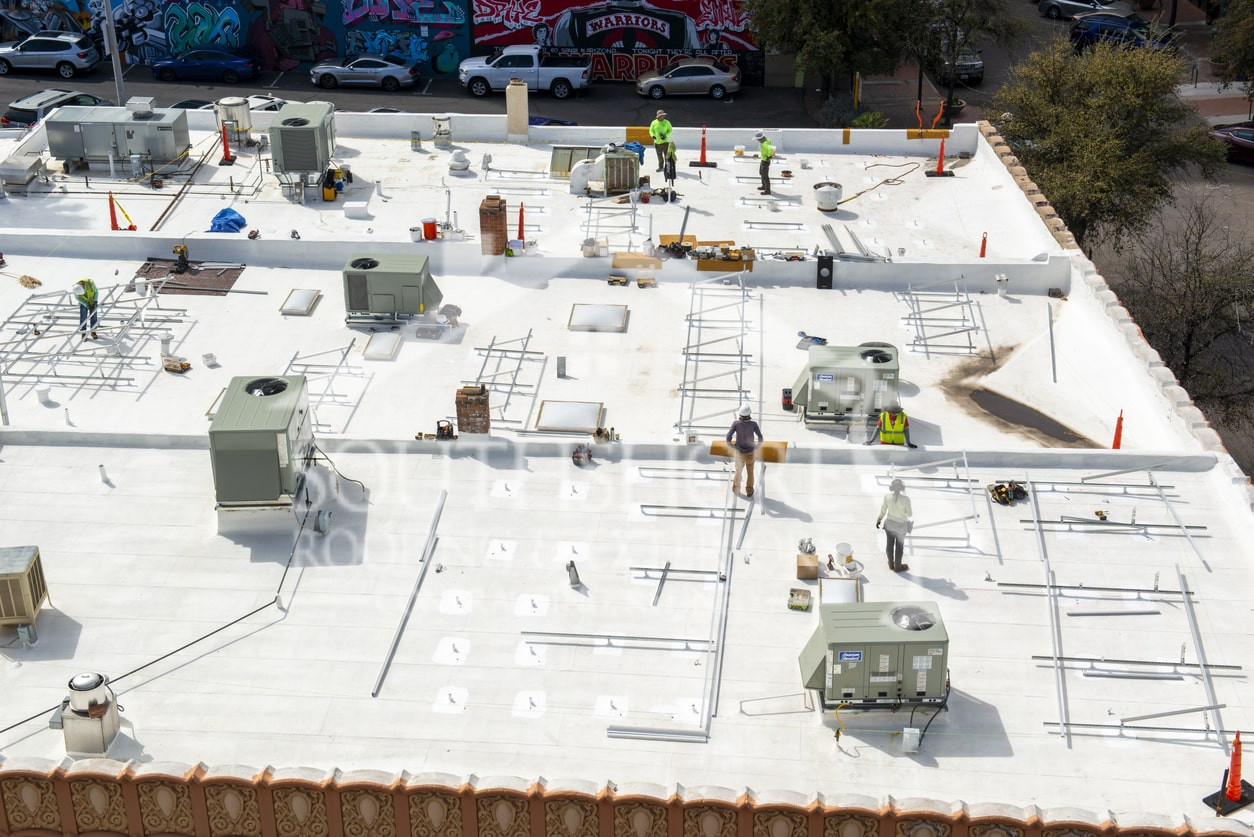

Brandon sits in the heart of the Tampa Bay area, where commercial roofs deal with some of the most demanding weather conditions in the country. Summer brings daily afternoon thunderstorms, intense heat with highs regularly in the 90s, and a rainy season that can drop around 50 inches of rainfall annually across the region. That kind of sustained moisture and heat puts real pressure on low-slope roofs, especially around seams, drains, flashing, and areas where rooftop equipment punches through the membrane. When those spots start to fail, even a small defect can let water into your building fast, and the damage adds up quickly once it reaches ceilings, insulation, and interior systems.
Commercial properties in Brandon, including retail centers, office parks, warehouses, and medical facilities, typically rely on low-slope roofing systems like TPO, EPDM, modified bitumen, and metal. These systems perform well when they are maintained, but Florida's sun accelerates material aging, and the constant cycle of heat and heavy rain stresses seams and surface coatings year after year. Getting ahead of those issues before they turn into active leaks is what separates a minor repair from a much larger and more expensive problem.
SouthShore Roofing & Exteriors works with building owners and property managers across Brandon to find the source of commercial roof problems, make targeted repairs, and keep operations running with as little disruption as possible to tenants and staff.
A commercial roof repair needs to account for the source of the problem, the condition of the surrounding roofing, and the property's daily operations. SouthShore Roofing & Exteriors evaluates the affected areas, explains the recommended repair, and reviews the completed work before the job is closed.
Brandon's heat, humidity, and long rainy season create the right conditions for several recurring problems on commercial roofs. Low-slope systems are especially vulnerable because water has nowhere to go quickly, and any weak point in the membrane, flashing, or drainage can turn into an active leak before you realize there is a problem. Knowing what typically goes wrong helps you catch issues early and act before the damage spreads inside your building.
| Common Issue | Typical Cause | Where It Usually Appears |
|---|---|---|
| Seam separation | Heat expansion and UV exposure weakening membrane bonds over time | Across the field of the roof and at perimeter edges |
| Flashing failure | Storm-related separation or deterioration around roof edges and curbs | Parapet walls, HVAC curbs, and gaps |
| Ponding water | Clogged or undersized drains and scuppers preventing proper runoff | Low points on flat and low-slope roof surfaces |
| Membrane punctures | Foot traffic, falling debris, or equipment installation | Around rooftop HVAC units and pipe spaces |
| Surface deterioration | Florida sun accelerating material aging on TPO, EPDM, and modified bitumen | Broad surface areas exposed to direct sunlight |
Many of these issues develop gradually and stay hidden until rainfall reveals them. Moisture scanning can locate water that has already worked its way into the roofing system before interior damage becomes visible, making it a valuable tool for building owners who want a complete picture of their roof's condition before committing to a repair scale.
Whether your roof is TPO, EPDM, or modified bitumen, repairs are made using materials matched to your existing system so patches bond correctly and hold up under Florida's heat and rainfall. Proper seam welding and membrane patching restore a watertight seal without requiring a full roof replacement when the rest of the system is still in good shape.
HVAC units, pipe gaps, skylights, and curb-mounted equipment are among the most common leak sources on commercial roofs in Brandon. We repair and reseal the flashing around these gaps to stop water from working its way into your building through gaps that are easy to miss during a routine walkthrough.
Ponding water is one of the fastest ways to shorten the life of a low-slope roof, and clogged or undersized drains are often the reason it builds up. We clear blocked drains and scuppers and address drainage deficiencies that allow water to sit on the surface of the roof after Brandon's heavy afternoon storms.
Commercial roof repairs in Hillsborough County often require permit review and must meet Florida's statewide building code standards for wind resistance and repair scale. We handle the documentation side of the work so your repair is properly recorded, code compliant, and easy to reference if your property ever comes up for inspection or review.
Brandon's combination of intense heat, heavy seasonal rainfall, and year-round humidity is hard on commercial roofing systems. The longer a problem sits, the more it costs to fix, and the greater the risk of damage reaching interior systems, inventory, or equipment. Keeping your facility protected means staying ahead of the small issues before the next round of storms has a chance to make them worse.
SouthShore Roofing & Exteriors is ready to help you figure out what is going on with your roof and get it repaired correctly. If you have a known leak, a repair that needs attention before the rainy season, or a roof that simply has not been inspected in a while, reach out, and we will take a look.
Got questions about your roof? We’ve got answers. From maintenance tips to insurance claims and repair timelines, our FAQ section covers the most common concerns homeowners have. Get informed and make confident decisions about protecting your home.
Rooftop HVAC equipment creates more gaps, curb details, and foot traffic than almost any other part of a commercial roof, and all of that activity puts repeated stress on the membrane and flashing directly around the units. In Brandon's heat, those curb flashings expand and contract constantly, which loosens seals over time even on roofs that are otherwise in decent shape. Service technicians also walk the same paths repeatedly to reach equipment, which causes wear and punctures in areas that often go unnoticed until rainfall finds the gap.
Timing does matter here, and not just for obvious reasons. Most repair materials need a dry surface and a window of stable conditions to bond and cure correctly, which can be harder to guarantee once the rainy season is in full swing from June through September. Getting repairs done before that window closes gives the work the best chance to set properly and get tested by real rainfall, rather than being rushed during an active leak. That said, emergency repairs can be completed year-round when a leak cannot wait.
Yes, because water almost always travels before it shows up. On low-slope roofs common in Brandon, moisture can work into seams, under flashing, or through small membrane punctures and sit in the roofing system for weeks before it reaches a ceiling or wall. By the time a stain appears inside your building, the water has usually been there long enough to affect insulation and roof decking beneath the surface. A roof inspection catches those hidden problem areas before interior damage gives you the first sign that something is wrong.
Don't wait for leaks or storm damage to threaten your property. Our Tampa roofing team delivers reliable repairs, replacements, and maintenance services that stand up to Florida's toughest weather. With years of local experience and a commitment to quality craftsmanship, we're here to keep your family safe and dry.
Get your free roofing estimate today and discover why Tampa homeowners trust us with their most important investment.