

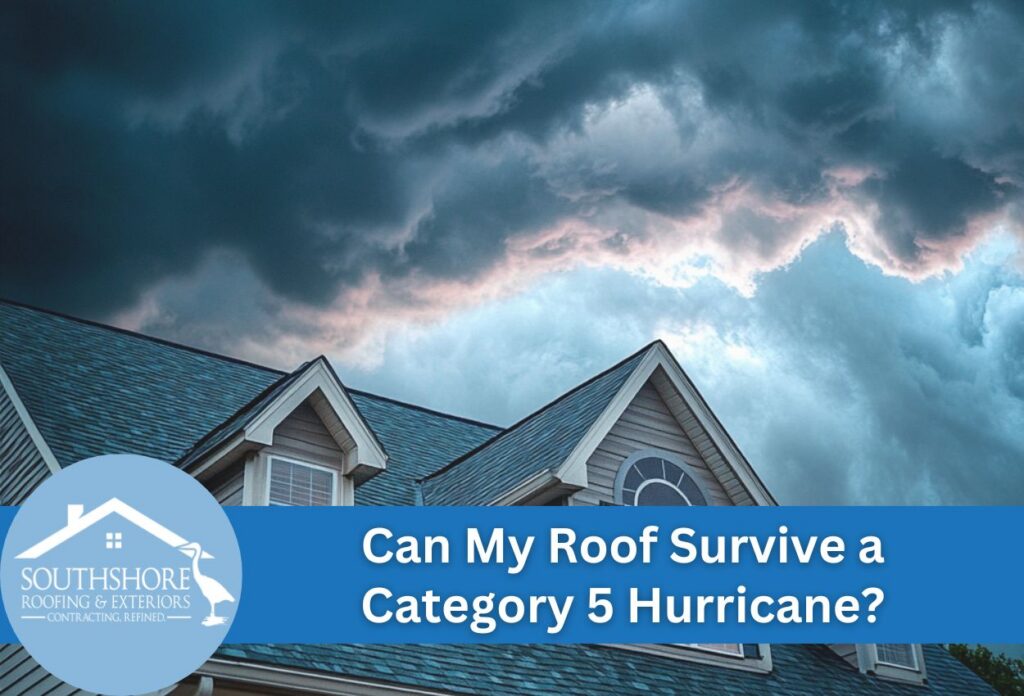

Category 5 hurricanes produce sustained winds exceeding 157 mph, and most standard residential roofs are not engineered to withstand that threshold. If your roof was installed to minimum code decades ago, there is a real chance it falls short of what Tampa’s storm season can throw at it.
Tampa sits inside Florida’s High-Velocity Hurricane Zone (HVHZ). That designation means the Florida Building Code holds all roofing materials and installations to strict minimum wind resistance standards that go beyond what most other states require.
This article covers what you need to know before the next storm arrives: how different roofing materials are rated for wind, which structural reinforcements make the biggest difference, warning signs that your current roof may be vulnerable, and the steps Tampa homeowners can take now to prepare.
*Please note, price ranges listed in this article may not reflect the final cost of your project. Prices are subject to change based on various factors such as local labor rates, material quality, and more. All costs established in this article are rough estimates based on average industry rates.
What Wind Speed Can a Roof Withstand Before Damage Occurs?
Most standard 3-tab asphalt shingles are only rated to 60 to 70 mph, well below the 157 mph sustained winds that define a Category 5 hurricane.
| Roofing Material | Max Rated Wind Resistance | Common Use in Tampa |
|---|---|---|
| 3-tab asphalt shingles | 60 to 70 mph | Older homes: being phased out |
| Architectural shingles (standard install) | Up to 130 mph | Most common residential choice |
| Metal roofing | 140+ mph | Growing use in HVHZ areas |
| Concrete tile | Up to 125 mph | Popular in Tampa neighborhoods |
Wind speed ratings only hold up when installation meets both manufacturer specs and Florida Building Code requirements. A metal roof rated at 140+ mph can fail well below that threshold if fasteners are spaced incorrectly or underlayment is skipped. Category 5 winds start at 157 mph sustained, as defined by the NOAA Saffir-Simpson Hurricane Wind Scale, meaning only the best roofing system with proper full-system installation carries no maximum wind speed limitation that a storm can exceed on paper. Every other material on this list has a ceiling that a strong Category 5 can reach or surpass.
What Are the Signs Your Roof Is Not Hurricane Ready?
A Tampa roof showing any one of these warning signs before storm season is already at risk, and a roof showing two or more needs professional evaluation before hurricane season peaks.
- Missing, curling, or cracked shingles: Shingles that have lifted at the edges or lost granules are no longer bonded tightly to the deck. Even moderate winds in the 50 to 60 mph range can tear them off entirely.
- Roof age over 15 to 20 years for asphalt or 25 years for tile: Roofs older than 20 years are far more likely to sustain major damage during hurricane-force winds. Florida insurers frequently require a full inspection or replacement once a roof hits the 15 to 25-year mark.
- No hurricane straps or clips in the attic: Without these metal connectors fastening roof trusses to exterior walls, wind uplift can separate the entire roof structure from the home during sustained high winds.
- Rust or deterioration at flashing points: Corroded flashing around chimneys, vents, and skylights creates gaps where both wind and water enter. This is one of the first places a storm exploits a weak roof.
- No secondary water barrier under shingles: A waterproof underlayment layer is required under the Florida Building Code Roofing Chapter HVHZ Standards. Without it, a storm that strips even a few shingles turns into immediate interior water damage.
- Deteriorating soffit or fascia boards: Rotting or loose soffit panels are a direct wind uplift vulnerability. Hurricanes frequently peel roofs starting at the edges, and damaged soffit accelerates that process.
Tampa’s year-round humidity and roughly 240 annual sunshine days accelerate material breakdown faster than in drier climates. A 12-year-old Tampa roof may realistically perform closer to a 17-year-old roof elsewhere. If your roof is older than 15 years and has not been inspected recently, schedule a residential roof inspection before June 1, when Atlantic hurricane season officially begins.
Which Hurricane-Proof Roofing Materials for Category 5 Winds Perform Best?
Metal roofing leads all common Tampa options with a 140+ mph wind rating and a lifespan of 40 to 70 years, but no material performs to its rated limit without HVHZ-compliant installation underneath it.
| Roofing Material | Max Wind Rating | Lifespan | HVHZ Compliant | Debris/Impact Resistance |
|---|---|---|---|---|
| Metal roofing | 140+ mph | 40 to 70 years | Yes (when properly installed) | High resists most impact and puncture |
| Concrete tile | Up to 125 mph | 50+ years | Yes (with HVHZ fastening) | Moderate heavy but can crack under direct impact |
| Synthetic/composite shingles | Up to 130 mph | 30 to 50 years | Select products qualify | High Class 4 impact resistance: Lighter than concrete tile |
Synthetic and composite roofing options are gaining ground on Tampa re-roofs because they deliver Class 4 impact resistance against flying debris while weighing far less than concrete tile, an advantage that reduces structural stress during high winds. Material choice matters, but it only tells part of the story.
Enhanced nailing patterns, hurricane clips, a waterproof underlayment, and properly installed flashing must all meet HVHZ standards. Without those components in place, even the highest-rated material on this list can fail before a Category 5 reaches full strength. SouthShore Roofing & Exteriors installs roofing systems built to the Florida Building Code’s HVHZ requirements from the deck up.
How Do You Reinforce a Roof for Hurricane Season Without Full Replacement?
Three reinforcement methods can improve a Tampa roof’s wind resistance by an estimated 20% to 30% without a full replacement: hurricane straps or clips, secondary water barrier underlayment upgrades, and re-nailing the roof deck to current code. None of these options is a permanent fix for a roof that is already deteriorated, but for a structurally sound roof approaching storm season, they represent real, measurable protection.
- Hurricane straps and clips (retrofit): Metal connectors fastened between roof trusses and exterior wall framing prevent wind uplift from separating the roof structure. Retrofit installation on a standard Tampa home typically runs $800 to $1,500, depending on attic access and truss spacing.
- Secondary water barrier underlayment: Adding or upgrading to a self-adhering waterproof underlayment beneath the surface material reduces interior water damage when storm winds breach the outer layer. This is a Florida Building Code requirement on new installs and a smart upgrade on older roofs that were never fitted with one.
- Re-nailing the roof deck to the current code: Florida Building Code requires ring-shank nails at 6-inch spacing for roof decking. Many older homes were built with smooth-shank nails at wider spacing, which pull out far more easily under sustained winds. Re-nailing the deck to current standards closes that gap without replacing sheathing or shingles.
Reinforcement work should be completed before June 1, the official start of Atlantic hurricane season, because most Tampa roofing contractors book out 4 to 6 weeks ahead of the August to September peak. If your roof is older than 20 years, shows active deterioration, or was improperly installed, these upgrades are not enough. A roof in that condition requires residential roof replacement to meet HVHZ performance standards. No amount of retrofit work changes that outcome.
Is Upgrading to a Hurricane-Resistant Roof Worth the Cost in Tampa?
Yes, when hurricane roof damage repairs average $5,000 to $45,000+ per storm, upgrading to a wind-rated system is one of the better long-term financial decisions a Tampa homeowner can make. A full roof replacement for a 1,500 to 2,000 sq ft home runs $8,000 to $15,000 for an asphalt shingle system, $18,000 to $35,000 for metal roofing, and $20,000 to $40,000 for concrete tile. Those numbers look large upfront, but they look different when measured against repeated repair bills and rising insurance costs.
| Roofing System | Replacement Cost (1,500–2,000 sq ft) | Lifespan | Est. Annual Insurance Savings (UMVI) |
|---|---|---|---|
| Asphalt shingle system | $8,000 to $15,000 | 15 to 20 years | $500 to $1,000+ |
| Metal roofing | $18,000 to $35,000 | 40 to 70 years | $1,000 to $2,000+ |
| Concrete tile | $20,000 to $40,000 | 50+ years | $500 to $2,000+ |
Florida homeowners with wind-rated roofing systems can qualify for insurance premium discounts through the Florida Uniform Mitigation Verification Inspection program, with documented savings of $500 to $2,000+ annually, depending on coverage level and system rating. A metal roof lasting 40 to 70 years may replace 2 to 3 asphalt cycles over 40 years, meaning the higher upfront cost often costs less in total than repeatedly replacing a lower-rated system. A licensed roofing contractor can pull your current inspection report and estimate where a wind-rated upgrade fits your budget and timeline. Homeowners can also explore roof financing options to make the transition to a hurricane-resistant system more manageable.
Ready to Find Out If Your Tampa Roof Can Handle the Next Hurricane?
A wind-rated roof upgrade can save Tampa homeowners $500 to $2,000+ annually on insurance, but only if it’s installed before the June 1 hurricane season start date. Most contractors book out 4 to 6 weeks ahead of peak season, so the window to act is shorter than it looks. SouthShore Roofing & Exteriors serves Tampa homeowners with free roof inspections performed to HVHZ standards, covering wind resistance ratings, structural vulnerabilities, and the most cost-effective path forward.
Schedule your free roof inspection.
Not ready to schedule? Learn more about hurricane roof repair services.