


Planning a commercial roof installation requires understanding how long the project will take from start to finish. Business owners and property managers need accurate timeline projections to coordinate operations, minimize disruptions, and generally plan their roofing projects.
The commercial roof installation timeline varies significantly based on building size, roofing material, weather conditions, and project complexity. Most commercial roofing projects take anywhere from several days to several weeks to complete, depending on these variables.
Factors affecting the commercial roofing process include the type of existing roof system, structural requirements, and accessibility of the building. Tampa’s subtropical climate can make it difficult to plan roofing projects, with frequent afternoon thunderstorms and high humidity levels that can impact installation schedules. Weather delays are also common during the summer months when daily rain can interrupt work progress.
Different types of commercial roofing systems have varying installation timeframes. Single-ply membrane systems typically install faster than built-up roof or modified bitumen systems. The commercial roof installation process also depends on whether the project involves a complete tear-off or installation over existing materials.
Commercial roofing project phases typically include preparation, material delivery, installation, and final inspections. Understanding these phases and the other factors that influence commercial roof installations helps property owners anticipate potential delays and plan accordingly for their business operations during the project.
How Project Size and Building Complexity Impact Installation
The square footage of a commercial building directly correlates with the roof installation timeline. Larger roof surfaces require more materials, additional labor hours, and extended work periods to complete installation. A 5,000 square foot building typically takes days for installation, while buildings exceeding 50,000 square feet may require several weeks to finish completely.
Roof dimensions and layout complexity significantly influence how long commercial roof installation takes. Buildings with multiple levels, rooftop equipment, or irregular shapes need more detailed work and precision cutting. HVAC units, skylights, and drainage systems create obstacles that extend installation time as workers navigate around these components carefully.
Building height also presents substantial challenges that affect commercial roofing project phases. Taller structures require additional safety equipment, specialized lifting equipment, and more time for material transportation to the roof level. Multi-story buildings often need crane services for material delivery, which adds scheduling complexity and potential delays to the overall timeline.
Accessibility issues can dramatically affect the commercial roofing process. Buildings with limited parking, narrow streets, or restricted access points complicate material delivery and equipment positioning. Additionally, structural complications such as weak decking, damaged support systems, or code compliance upgrades extend project duration as contractors address these underlying issues before proceeding with new roof installation.
Different Commercial Roofing Materials and Their Installation Timeframes
There are many roofing materials that property owners can choose for their building, each with varying installation timelines. TPO roofing systems generally offer the fastest installation among single-ply membranes, typically completing in a few days for average-sized commercial buildings. The lightweight material and heat-welded seams allow crews to work efficiently across large roof surfaces. TPO’s flexibility and ease of handling make it suitable for projects with tight timeline requirements.
EPDM rubber roofs typically have similar timeframes to TPO but involve different installation techniques that can affect project duration. The adhesive-based installation process needs specific temperature and humidity levels for optimal performance, meaning weather conditions can extend each project phase when conditions aren’t ideal.
Modified bitumen systems may have longer installation periods, often taking around a week for comparable roof sizes. The multi-layer application process requires torch application or hot asphalt, creating additional safety protocols and slower work progress. Material preparation requirements include heating equipment and temperature monitoring throughout installation.
Metal roofing installations vary widely based on panel type and fastening methods. Standing seam systems typically take less than a week, depending on roof complexity, while structural metal panels may require additional framework preparation. The commercial roof installation process for metal systems includes precise measurements, custom fabrication, and specialized tools that can extend overall project timelines compared to membrane systems.
Each roofing material type’s installation techniques directly impact how long commercial roof projects take. These material-specific requirements affect the types of commercial roofing systems contractors can efficiently install within projected timeframes.
Weather Conditions and Seasonal Considerations for Commercial Roofing Projects in Tampa
Tampa’s subtropical climate can significantly impact commercial roof installation timelines throughout the year. The region’s rainy season, which typically runs from May through October, brings daily afternoon thunderstorms that can halt roofing work for hours or entire days. High humidity levels affect material handling and adhesion processes, particularly for single-ply membrane systems that require specific environmental conditions for proper installation.
Hurricane season comes with the most substantial weather-related concerns for the commercial roofing process. Between June and November, potential storm activity can delay project starts or force temporary work stoppages as contractors secure job sites and protect partially completed installations. Even tropical storm threats require comprehensive preparation that extends commercial roofing project phases beyond original estimates.
Plus, Florida’s intense heat and UV exposure during the summer months create additional scheduling considerations. Morning work hours become essential as afternoon temperatures often exceed safe working conditions. This weather pattern typically extends how long commercial roof installation takes during peak summer months, when work windows are often limited to early morning periods.
Successful commercial roof installations require scheduling around Tampa’s weather patterns. Contractors typically recommend avoiding complex projects during peak hurricane season and planning installations during drier winter months when possible. Planning for these seasonal variations helps property owners set realistic expectations for their commercial roofing project and avoid weather-related delays that can impact business operations.
Understanding Pre-Installation Planning and Preparation Phases
The pre-installation phase is a critical period that often requires more time than the actual commercial roof installation process itself. This preparation period typically spans weeks before any physical work begins on the roof surface.
Permit acquisition is one of the most time-consuming elements affecting commercial roofing timelines. Most jurisdictions require a few weeks for permit approval, depending on project complexity and local building department workloads. Commercial properties often need structural engineering reviews, especially when changing roofing materials or addressing load-bearing modifications that extend approval timeframes.
Material ordering and delivery coordination significantly impact how long commercial roof installation takes from project initiation to completion. Specialty roofing materials may require longer wait times for manufacturing and shipping, particularly for custom colors or specific performance requirements. Large commercial projects need substantial material quantities that require careful logistics planning and adequate storage space.
Site preparation activities include setting up safety equipment, material staging areas, and building protection measures. Contractors must coordinate with building occupants to establish work zones, protect sensitive equipment, and arrange alternative access routes. These coordination efforts typically require multiple days of advanced planning to minimize operational disruptions.
Additionally, scheduling inspections throughout the commercial roof installation requires advanced coordination with building officials. The multiple inspection points during installation need flexible scheduling that accommodates both inspector availability and project progression.
The Step-by-Step Commercial Roof Installation Process and Daily Progress
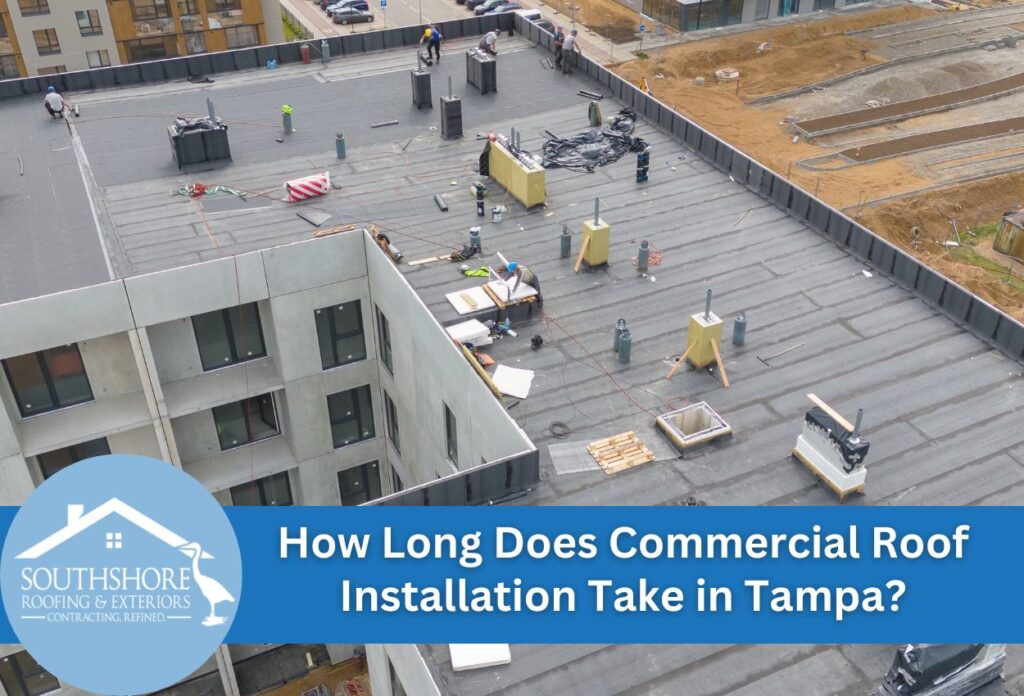
Understanding the daily progression of commercial roof installation activities helps property owners anticipate project milestones and plan business operations accordingly. The commercial roof installation process follows a specific sequence that maximizes efficiency while ensuring quality workmanship throughout each phase.
Day one typically begins with tear-off activities. Professional crews can generally remove an entire old roof in a day or two, depending on the types of commercial roofing systems being replaced and the size of the surface. Multiple membrane layers or built-up roofing systems slow this process considerably compared to single-layer removals.
Deck preparation follows tear-off completion and involves cleaning, inspection, and repairs to the structural surface. This phase often reveals unexpected issues that can extend the commercial roof installation timeline. Crews typically prepare 3,000 to 5,000 square feet of deck surface daily when minimal repairs are needed, though extensive structural work can reduce this coverage significantly.
Insulation installation is the next phase, with experienced teams covering significant roof spans in a single day under optimal conditions. Weather conditions heavily influence this stage of the commercial roofing project, as dry conditions are needed for proper installation. Crew size directly impacts daily progress, with larger teams completing insulation phases faster.
Material installation concludes the primary installation sequence, with coverage rates varying by material type. Single-ply systems allow crews to complete larger surfaces in shorter timeframes, while modified bitumen systems typically complete less per day due to more complex application requirements. Knowing these factors affecting the commercial roofing process helps building owners plan their project and set reasonable expectations for completion.
Factors That Can Extend Your Commercial Roofing Project
Several unexpected issues commonly arise during commercial roofing installations that can significantly impact the original timeline. These complications often become apparent only after work begins, making it difficult to predict exactly how long commercial roof installation takes from the outset. However, planning for potential delays helps property owners prepare for extended project durations and budget accordingly.
Structural repairs are one of the most significant factors affecting the commercial roofing process. Hidden deck damage, deteriorated support beams, or inadequate structural capacity often require immediate attention before new roofing installation can proceed. These discoveries can add days or weeks to the original timeline as contractors must address safety concerns and building integrity issues.
Code compliance updates frequently extend commercial roofing projects when existing buildings don’t meet current standards. Building officials may require additional insulation, upgraded drainage systems, or enhanced fire ratings during the permit review process. These requirements necessitate design modifications and additional materials that weren’t included in the original project scope.
Material delays continue to impact construction timelines across the industry, particularly for specialty roofing products or custom components. Supply chain disruptions can extend delivery times for specific types of commercial roofing systems, especially when projects require exact color matches or specialized performance characteristics. Manufacturing delays or shipping complications can halt project progress entirely until materials arrive on site.
Choosing quality contractors with experienced project management significantly reduces the likelihood of extended delays during the commercial roof installation process. Established contractors maintain relationships with reliable suppliers, carry appropriate insurance coverage, and employ skilled crews capable of addressing unexpected challenges efficiently. Professional project management includes contingency planning, weather monitoring, and proactive communication that keeps projects moving forward despite minor setbacks that commonly occur during roofing installations.
Expert Commercial Roof Installation Services in Tampa
Understanding the details of commercial roof installations is crucial for your business’s operational planning and budgeting. At SouthShore Roofing & Exteriors, we specialize in delivering top-quality roofing solutions tailored to the unique climate and building complexities of Tampa. Whether you’re considering TPO, EPDM, or metal roofing systems, or commercial roof coatings, our experienced team ensures a seamless installation process, accommodating the seasonal weather patterns to avoid unnecessary delays.
Don’t let uncertainties about installation timelines disrupt your business operations. Take proactive steps by consulting with our roofing experts. Call SouthShore Roofing & Exteriors today at (813) 400-3329 to schedule your consultation and ensure your project stays on track!