 Instant Quote
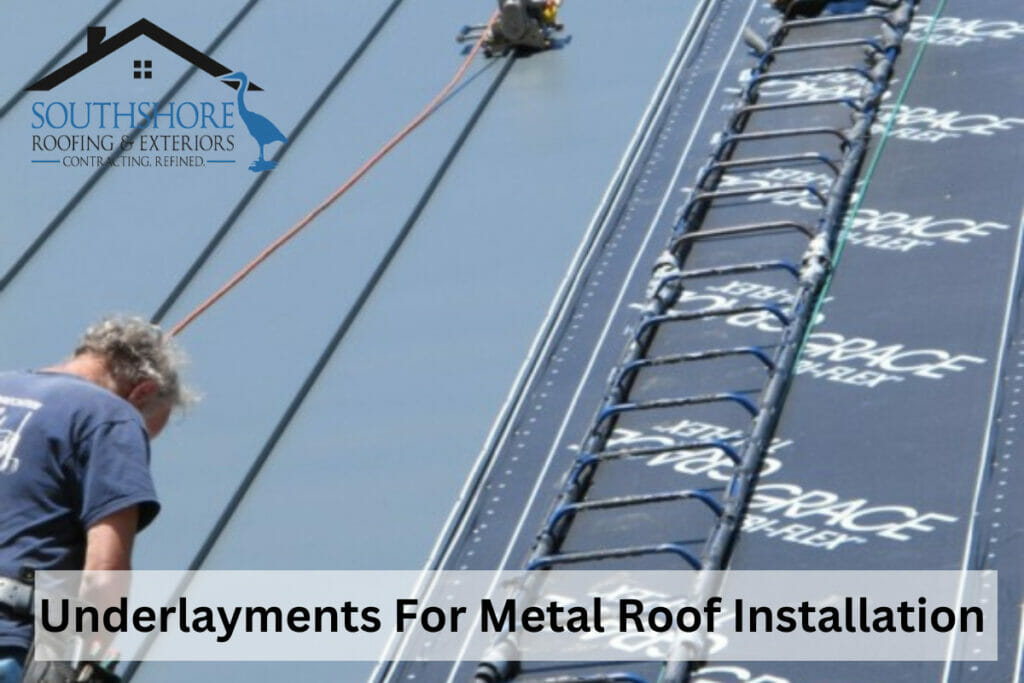
When investing in a metal roof, the underlayment beneath the panels is just as critical as the metal itself. Metal roof underlayment is the protective membrane installed directly onto the roof deck before the metal panels go on — and in Florida’s climate of intense heat, coastal humidity, and hurricane-force winds, choosing the wrong one can cost you significantly down the road.
This guide breaks down the three main underlayment types, compares the top seven products by performance, and answers the questions Florida homeowners ask most before scheduling a roof replacement.
What Is Metal Roof Underlayment, and Why Does Your Roof Need It?
Metal roof underlayment is a secondary water-shedding barrier installed between the roof deck (typically OSB or plywood) and the metal panels. Even though metal panels are among the most durable roofing materials available, they are not a standalone waterproofing system — gaps at fasteners, seams, and penetrations can allow moisture infiltration over time.
Here’s why underlayment is non-negotiable, especially in Florida:
- Moisture barrier: Prevents wind-driven rain and condensation from penetrating the roof deck and causing structural rot.
- Thermal regulation: Reduces heat transfer from metal panels into the attic, improving energy efficiency — particularly relevant in Tampa’s high-UV environment.
- Sound dampening: Absorbs impact noise from rain, hail, and debris, significantly reducing sound transmission into living spaces. This is one of the most effective ways to address the noise concerns many homeowners have about metal roofs in rain.
- Deck protection during installation: Provides a watertight layer that protects the home if metal panel installation is delayed — some synthetic underlayments can remain exposed for up to 12–18 months without losing integrity.
- Code compliance: Florida Building Code requires approved underlayment under metal roofing systems in most residential and commercial applications.
- Warranty protection: Many metal panel manufacturers require specific underlayment products to validate material warranties. Installing without an approved membrane can void both the panel warranty and your contractor’s workmanship guarantee.
What Are the Three Types of Metal Roof Underlayment?
Understanding the core categories helps you evaluate the products below. Each type has a different performance profile when exposed to Florida’s thermal cycling and storm exposure.
| Underlayment Type | Material | Best For | Florida Suitability |
|---|---|---|---|
| Felt (tar paper) | Asphalt-saturated cellulose or fiberglass | Budget projects, steep slopes | ⚠️ Limited — softens under high heat, breaks down faster |
| Synthetic sheet | Woven polypropylene or polyethylene | Most residential metal roofs | ✅ Strong — UV resistant, lightweight, high-temp rated |
| Self-adhered (peel-and-stick) | Rubberized asphalt or butyl over polyethylene | Eaves, valleys, penetrations, coastal homes | ✅✅ Best for hurricane zones — forms a waterproof seal |
Important distinction: Synthetic underlayments create a water-shedding barrier, while self-adhered membranes create a true waterproof seal. In Florida’s coastal and storm-prone environments, self-adhered products — or a hybrid approach combining peel-and-stick at eaves and valleys with synthetic on field areas — deliver the highest level of protection.
A note on felt underlayment: Traditional 15 lb and 30 lb felt paper is still available, but most metal roofing professionals have moved away from it for Florida installations. Felt can soften and off-gas petroleum byproducts under the intense heat that builds beneath metal panels, potentially causing oil canning or adhesion issues. Synthetic roof underlayment now delivers better durability at a competitive price point, making felt a difficult choice to justify in this climate.
Does a Metal Roof Actually Need Underlayment in Florida?
Yes — and Florida’s climate makes this more consequential than in most states. The combination of summer heat (roof surface temperatures regularly exceeding 150°F), high annual rainfall, hurricane-season wind loads, and coastal salt air creates an environment where the roof deck is under constant stress.
Even a standing seam metal roof, which conceals all fasteners, benefits from a quality underlayment layer because metal panels expand and contract with temperature swings. Without a compliant underlayment, that thermal movement can work fasteners loose and create micro-gaps over time. Florida’s hurricane exposure compounds this further — wind-driven rain can travel nearly horizontally, bypassing vertical panel seams in ways that calm-weather testing doesn’t capture.
The importance of a roof vapor barrier is amplified in humid climates where condensation beneath metal panels can damage roof decking from the inside out — a failure mode that often goes undetected until structural repair becomes unavoidable.
Top 7 Metal Roof Underlayment Products for Florida
1. GAF Tiger Paw™ Synthetic Underlayment
GAF Tiger Paw is a woven synthetic polypropylene underlayment engineered for performance under metal and tile roofing systems. Its slip-resistant surface and rugged construction make it a practical choice for steep-slope applications, and it resists UV degradation for up to 180 days of exposure — useful during phased installation projects or new construction timelines.
Key specs:
- Exceptional moisture control with a watertight barrier construction
- Wind-resistant design aligned with high-velocity hurricane zone requirements
- Backed by GAF’s limited lifetime warranty when installed as part of an approved roofing system
- Compatible with metal, asphalt shingle, and tile roofing materials
2. DuPont Tyvek® Protec™ 120
Tyvek Protec 120 is a four-layer synthetic underlayment built from woven polypropylene with a distinctive embossed surface that enhances grip during installation — a meaningful safety feature on steep Florida rooflines. Its design balances cost-effectiveness with multi-material compatibility across asphalt shingle, cedar shake, and metal roofing systems.
Key specs:
- Four-layer construction provides superior tear resistance under thermal stress
- Slip-resistant coating maintains traction in humid, rain-interrupted installation conditions
- Water-resistant barrier protects the roof deck during extended exposure windows
- Straightforward installation that experienced crews can complete efficiently
3. Owens Corning ProArmor® Synthetic Roof Underlayment
ProArmor uses Owens Corning’s proprietary Fusion Back Coating Technology™ to deliver enhanced adhesion and superior tear resistance. Its anti-slip surface is engineered for safe installation on steep-slope roofs, and its polymer construction handles Florida’s prolonged UV exposure during open installation periods.
Key specs:
- UV protection rated up to 90 days of direct exposure
- Advanced polymer technology for high tear resistance
- Reduces heat transfer, supporting energy efficiency in warm climates
- 10-year limited warranty
4. GCP Grace Ice and Water Shield® HT
Grace Ice & Water Shield is a self-adhering peel-and-stick membrane that bonds directly to the roof deck without mechanical fasteners. The HT (High Temperature) version is specifically engineered to resist the elevated temperatures that build beneath metal panels — making it the most appropriate formulation for Florida applications over the standard version.
Key specs:
- Self-adhered application eliminates fastener penetrations, removing a common leak pathway
- Rubberized asphalt construction maintains flexibility and adhesion under sustained high heat
- Ideal for eaves, valleys, and penetrations such as skylights, vents, and HVAC curbs where wind-driven moisture risk is highest
- Superior tear resistance and flexibility on complex roof geometries
View GCP Grace Ice & Water Shield®
5. Owens Corning RhinoRoof® U20
RhinoRoof U20 is a non-woven synthetic underlayment that uses advanced polymer technology to create a lightweight, high-durability barrier suited to both residential and commercial roofing applications. Its non-woven construction improves conformability on irregular roof decks — an advantage on older Florida homes where decking may not be perfectly flat.
Key specs:
- Reliable barrier against UV rays, wind-driven rain, and moisture infiltration
- Lightweight design simplifies installation and reduces labor time
- Suitable for residential and commercial metal roof systems
- 20-year limited warranty — one of the longer coverage windows in this product category
View Owens Corning RhinoRoof® U20
6. ArmorLay 25 Synthetic Underlayment
ArmorLay 25 meets ASTM D4869 and ASTM D226 standards — the same benchmarks used for asphalt-saturated felt — while delivering better dimensional stability and longevity. Its water-resistant composition prevents buckling, warping, and cracking that commonly occur in Florida’s thermal cycling environment, where roof surface temperatures swing dramatically between overnight lows and afternoon peaks.
Key specs:
- ASTM D4869 and D226 compliant
- Water-resistant construction that stays flat under thermal stress
- UV exposure rating up to 60 days
- A cost-effective option for projects with tighter budget constraints
7. Grip-Rite ShingleLayment-HT™
Grip-Rite’s ShingleLayment-HT is a 100% synthetic, 8-layer underlayment engineered for high-temperature climates. The “HT” designation reflects its tested performance under thermal stress, making it a strong fit for Florida’s sustained heat exposure. Its thicker multi-layer composition adds a meaningful structural buffer between the roof deck and the metal panels above, and its all-synthetic build avoids the asphalt degradation issues associated with felt alternatives.
Key specs:
- 8-layer construction for greater thickness and impact resistance
- High-temperature tested for warm-climate performance
- 100% synthetic — no asphalt saturation to degrade under heat
- Available for both residential and commercial applications
How Do You Choose the Right Underlayment for Your Metal Roof?
With seven strong products available, narrowing down the right choice comes down to four factors:
- Roof pitch: Low-slope metal roofs (under 3:12) carry higher water infiltration risk and benefit most from self-adhered membranes across the entire deck rather than just at eaves and valleys.
- Proximity to the coast: Homes within a few miles of saltwater face accelerated corrosion and elevated wind loads. Self-adhered membranes with sealed penetrations provide the tightest protection, and understanding how saltwater affects metal roofs should inform the full system design.
- Panel system type: Standing seam systems generate significant thermal expansion and contraction and require high-temperature-rated underlayment — not standard 15 lb felt — to accommodate movement without adhesion failure or oil canning.
- Budget: Synthetic underlayments cost more than felt upfront but typically last the life of the metal roof. Self-adhered products cost more again but eliminate the most expensive leak pathways. High-heat ice and water shield runs approximately $100–$125 per square (100 sq. ft.) — a meaningful line item to account for when reviewing your metal roof cost in Florida.
How Is Metal Roof Underlayment Installed?
Proper installation matters as much as the product itself. Even the highest-rated membrane will underperform if installed with wrinkles, insufficient overlaps, or unsealed seams. Here’s the sequence a qualified contractor should follow:
- Inspect and prepare the roof deck. Replace any damaged OSB or plywood before laying underlayment. Review our roof deck replacement guide if you suspect existing deck damage.
- Install lock strips or drip edge at eaves depending on the panel system.
- Apply self-adhered membrane at eaves first, extending up the roof at least 24 inches past the interior wall line — further in hurricane-prone coastal zones.
- Roll out synthetic underlayment horizontally across the field area, working eave to ridge, overlapping each course by a minimum of 4 inches (6 inches is better in high-rainfall zones).
- Double-layer at valleys, hips, and all penetrations — vents, skylights, HVAC curbs, and chimney bases — using self-adhered membrane to form a continuous waterproof seal.
- Secure with cap fasteners at manufacturer-specified intervals. Staples are not appropriate for synthetic underlayment and can compromise the membrane integrity.
- Install metal panels promptly to minimize UV exposure to the underlayment surface beyond its rated exposure window.
What Happens If You Skip Underlayment on a Metal Roof?
Skipping underlayment may reduce upfront installation costs, but it dramatically increases long-term exposure to several expensive failure modes:
- Deck rot: Without a moisture barrier, condensation and wind-driven rain work into the roof deck over time, leading to structural deterioration that requires full roof repair or replacement well ahead of schedule.
- Voided warranty: Most metal panel manufacturers require approved underlayment. Installing without it can void both the panel warranty and the contractor’s workmanship guarantee.
- Noise amplification: Without a buffer layer, rain and hail impact metal panels directly, transmitting significantly more sound into living spaces.
- Reduced thermal performance: Pairing a metal roof with a quality synthetic underlayment can improve thermal performance by over 200% compared to felt or no underlayment — a meaningful impact on cooling costs in Florida summers.
- Insurance complications: Following roof storm damage claims, adjusters assess whether the roofing assembly met code at the time of installation. Missing underlayment can affect claim eligibility and payout.
Get a Metal Roof Quote from SouthShore Roofing & Exteriors
Selecting the right metal roof underlayment is one of the highest-leverage decisions in any metal roofing project. At SouthShore Roofing & Exteriors, we install high-performance underlayment systems matched to your specific roof pitch, panel type, and location across Tampa Bay.
Book your free roof inspection online.